
Reviewed · ANCIENT EPHESUS TOURS
Ephesus Entry Ticket with Mobile Phone Audio Tour
Ephesus can feel like a maze, until you have a path. This entry ticket with a mobile phone audio tour helps you move in the right order and learn what you are actually looking at. I especially like the skip-the-line access and the fact the audio is offline with interactive maps, so you are not stuck hunting for signal. One thing to keep in mind: you must start at the Upper Gate (South entrance) near Magnesia Gate, or the audio flow and stop order can feel off.
You’ll cover the major hits without the stress of timing a live guide. I also like the practical pacing built around big wow moments like the Celsus Library and the Grand Theatre, plus smaller details that make the ruins feel human. The main drawback is value versus cost, since the audio experience depends on your phone working correctly and you bring your own headphones.
In This Review
- Key Highlights You Will Actually Use
- Ephesus With Audio On Your Terms
- Price and Value: What You’re Really Paying For
- Where to Start: Upper Gate (South Entrance) Near Magnesia Gate
- The 2.5-Hour Route: What You’ll See and Why It Matters
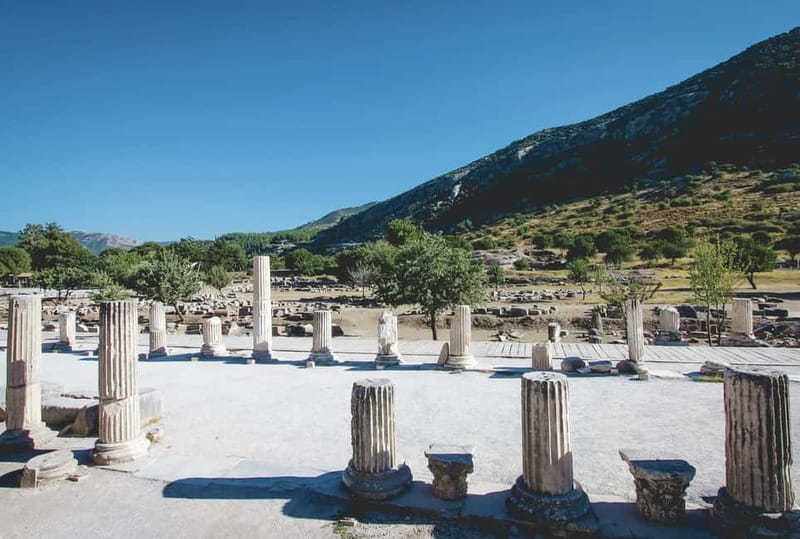
- State Agora: The Political Heart in Stone Form
- Bouleuterion: City Council Meetings and Performance Space
- Temple of Domitian: U-Shaped Altar, Not What You Expect
- Curetes Street: The Link Between Power and Trade
- Emperor’s Fountain Legend: A Story You Can Picture
- Scolastica Baths: Marble Latrines and the Everyday Side
- Grave of Arsinoe: The Egyptian Princess Moment
- Celsus Library: The Landmark Everyone Talks About
- Mazeus and Mithridates Gate: A Boundary Moment
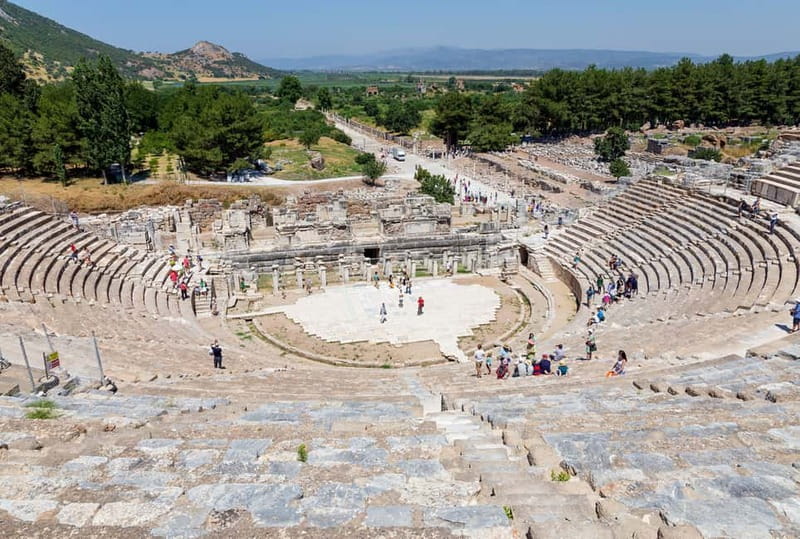
- Grand Theatre: Performances and Gladiatorial Games
- Church of Mary: Ruins at the End of the Crossroads
- The Audio Tour Experience: Offline Maps, Real-World Gaps
- Practical Tips: Shoes, Heat, and Keeping the Tech Alive
- Who This Works Best For
- Getting There: Taxi from Kusadasi or Selcuk
- Should You Book This Ephesus Entry Ticket With Phone Audio?
Key Highlights You Will Actually Use
- Skip-the-line entry saves your energy at a busy archaeological site
- Offline audio with interactive maps helps you follow the route without data
- Clear start point at Upper Gate near Magnesia Gate keeps the tour from getting awkward
- Landmarks covered in order like Celsus Library, Grand Theatre, and the Church of Mary
- Phone compatibility matters for Android and iOS, not Windows or older iPhones
- Small group size (up to 10) plus self-guided control over your pace
Ephesus With Audio On Your Terms
Ephesus is one of those places where the stones look dramatic even before you know the story. With this ticket, you do not just walk through ruins, you follow an audio route that gives you context as you go. It is self-guided, so you can pause for photos, catch your breath, or slow down when something grabs your attention.
This matters because Ephesus is not laid out like a museum floor. You will turn corners, cross open areas, and end up with several major monuments in view at once. The audio tour helps you pick a direction and understand what each stop is, instead of guessing based on appearance.
The trade-off is that you are responsible for the tech basics. You provide the smartphone and headphones, and you need enough storage for the offline content (about 100 to 150 MB). If your device is low on battery or the audio is not downloaded ahead of time, you lose the main benefit.
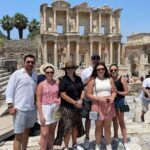
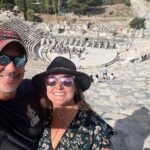
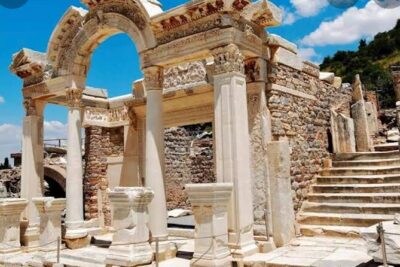
More of Ephesus underfoot, column by column:

Price and Value: What You’re Really Paying For
At $77 per person for entry plus the mobile audio tour, this is not a budget option. But you are not just buying information on your phone. You are also getting skip-the-line admission and an audio package that is meant to work as you walk, with maps and an ordered route.
So the value comes down to two questions:
- Do you expect to save real time at the ticket line?
- Will the audio route help you enjoy the site more than a standard, signage-only visit?
I found the biggest value in the combination. A skip-the-line ticket can be worth a lot when you are short on time, especially in a popular site like Ephesus. And if you like stories, legends, and explanations tied to what you see, the audio earns its keep quickly.
One note: some people feel the price is high compared with other big European sites. If you already know Ephesus well, or you are the type who reads signs and moves fast, the cost might feel steep. If you are coming to learn while you walk, the added guidance is the point.
Where to Start: Upper Gate (South Entrance) Near Magnesia Gate
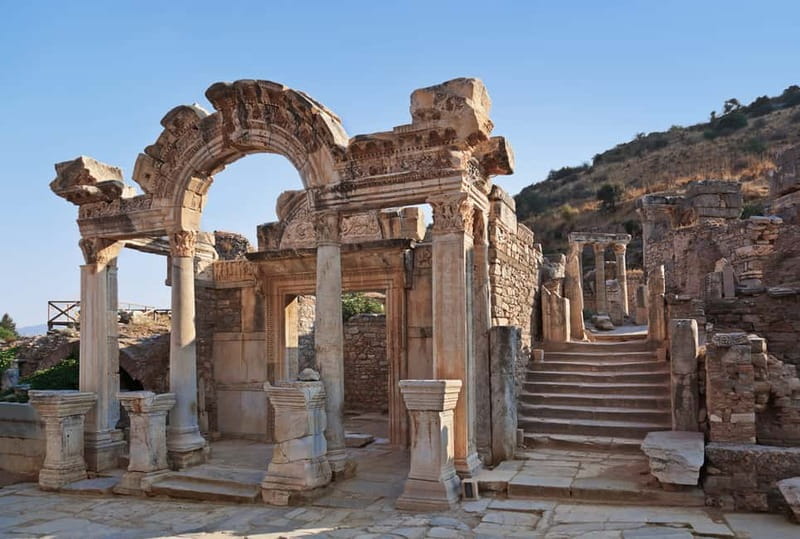
The single most important practical detail is the meeting point. The tour is designed to begin at the Upper Gate (South entrance), near Magnesia Gate.
If you start at another entrance, the audio might still play, but the stop order can feel mismatched compared with official site markers. One common issue people reported is that the audio tour stops do not exactly match the number of stops shown on official signage. That does not automatically ruin the experience, but it can make it harder to confirm you are on track.
My advice: before you walk in, open the audio on your phone, confirm it is ready to play, and follow the provided map plan. Also, consider taking a quick screenshot of your map screen or pinning your place in the audio so you can recover if you get turned around.
The 2.5-Hour Route: What You’ll See and Why It Matters
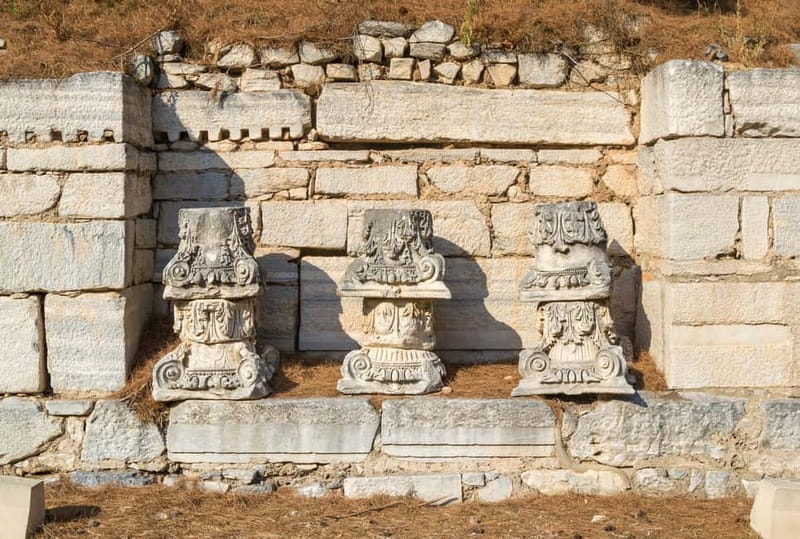
This is a 2.5-hour experience, designed around a steady walk through central Ephesus highlights. Since it is self-guided, you set the pace, but the route is built to take you through major monuments in a logical sequence.
Here’s what the audio route takes you through, and what makes each stop worth your time.
What Kusadasi regulars wave over next
- Istanbul: Daytime or Sunset Sightseeing Cruise & Audio Guide★ 4.8 · 14,430 reviews
- Istanbul: Basilica Cistern Fast-Track Entry and Audio Guide★ 4.6 · 7,521 reviews
- Topkapi Palace and Harem Skip-the-Line-Tickets & Audio Guide★ 4.3 · 4,745 reviews
State Agora: The Political Heart in Stone Form
Your first big stop is the State Agora, once the political center of the city. You’ll get oriented here, because this area signals how public life worked in Ephesus.
The value of starting with the Agora is simple: it frames everything else. Later monuments make more sense when you understand this was a place for decisions, gatherings, and civic energy.
Bouleuterion: City Council Meetings and Performance Space
Next is the Bouleuterion, the meeting place associated with the city council. The audio describes it as a space that may also have hosted artistic performances, which helps you picture it as more than politics in a room.
This is one of those stops where you benefit from explanations. From the outside, a large ruin can look like just another structure. With the audio context, it feels like a system of public life.
Temple of Domitian: U-Shaped Altar, Not What You Expect
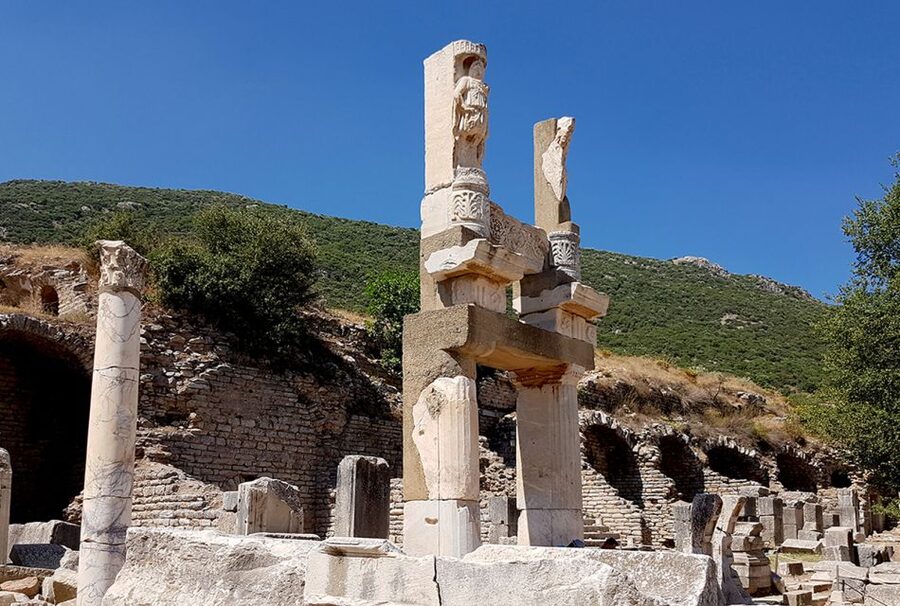
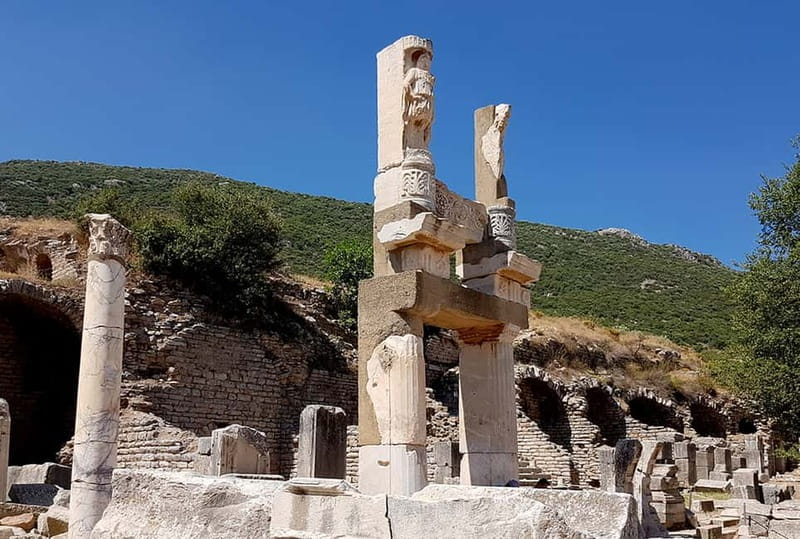
Then you reach the Temple of Domitian. This stop stands out because the audio points out the unusual layout, including the U-shaped altar.
I like this kind of detail because it keeps the tour from becoming repetitive. Ephesus has plenty of large-scale architecture, but this kind of layout-specific fact makes you slow down and look more carefully.
Curetes Street: The Link Between Power and Trade
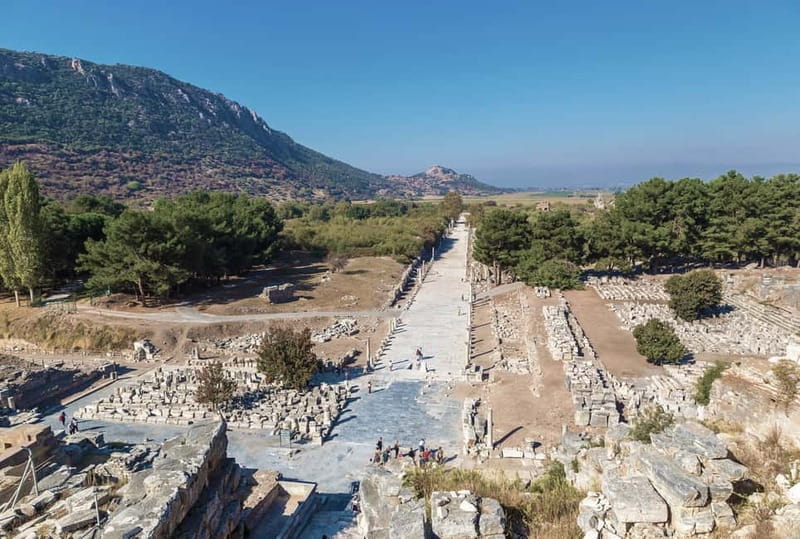
You then walk down Curetes, a connection between the political and commercial centers. Think of this as the city’s social and economic spine.
When you hear what this street linked, you naturally start imagining the flow of daily life: people moving between decision-making areas and markets.
Emperor’s Fountain Legend: A Story You Can Picture
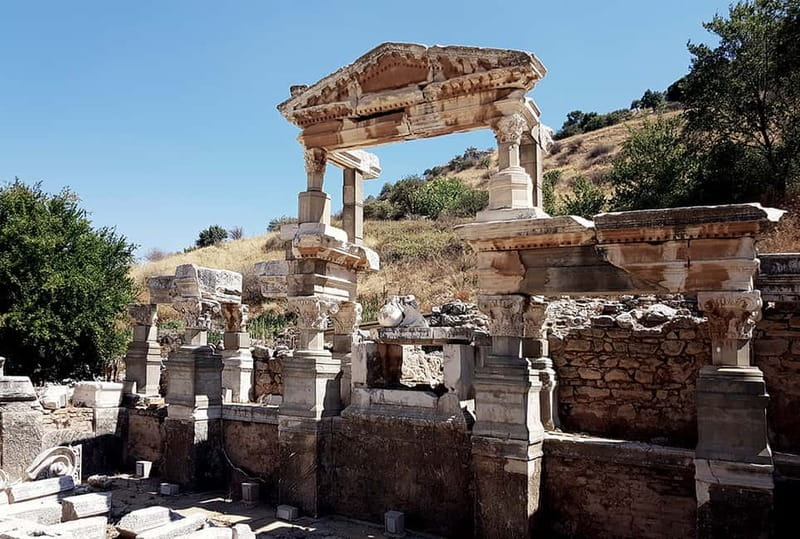
The audio also covers the legend of the emperor’s fountain. Even if legends are hard to verify, they add color to the ruins. You start seeing monuments as part of belief and storytelling, not just construction.
This is especially useful for first-time visitors. Instead of treating Ephesus like a photo checklist, you understand how people might have talked about these places.
Scolastica Baths: Marble Latrines and the Everyday Side
Next comes the large baths complex at Scolastica. The standout described in the audio is the lavish marble latrines.
That detail is worth your attention because it makes the ruins feel real. This is not only about temples and theatres. It is also about how a society handled daily routines, hygiene, and public architecture.
Grave of Arsinoe: The Egyptian Princess Moment
You’ll also pass the grave of Arsinoe, described as an Egyptian princess. This is a strong emotional and narrative stop because it connects Ephesus to wider Mediterranean history.
It is a good pause point. You can take time here, because the story gives you a focal point beyond the stones themselves.
Celsus Library: The Landmark Everyone Talks About
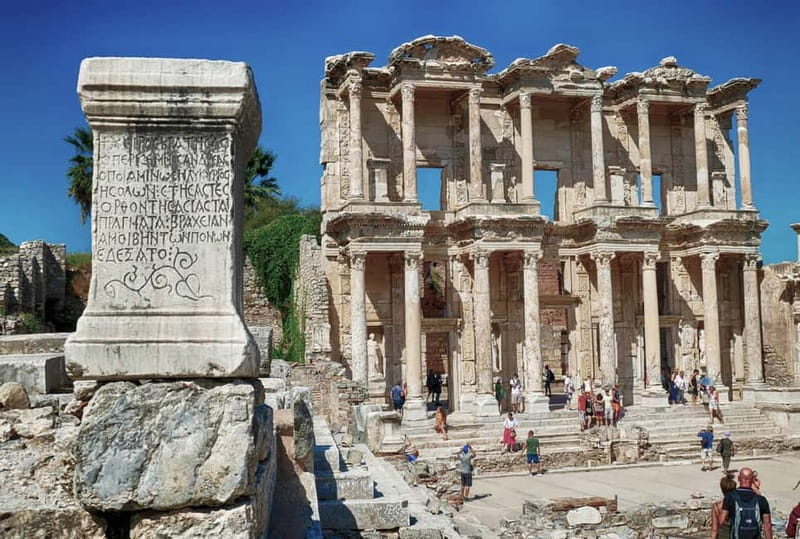
After Arsinoe, you reach the Celsus Library, widely considered the most famous landmark of Ephesus. This is the moment you want your phone charged for, since you will probably linger.
The audio helps you appreciate why Celsus matters visually and historically, instead of just snapping a few photos and moving on. And since this site is busy, having audio context makes waiting in place feel worthwhile.
Mazeus and Mithridates Gate: A Boundary Moment
From Celsus, the route leads toward the gate of Mazeus and Mithridates. City gates are not just entrances. They mark transition points, where architecture signals identity and status.
This stop works well as a reset after the library. You get a change of scene, plus the audio keeps the story moving forward.
Grand Theatre: Performances and Gladiatorial Games
Next is the Grand Theatre, where performances and gladiatorial games took place. The theatre is one of the biggest visual anchors in Ephesus, and hearing what it hosted helps you imagine the crowd and atmosphere.
This is another stop where the audio improves your experience because theatres can look similar across regions. Knowing what happened here changes how you read the space.
Church of Mary: Ruins at the End of the Crossroads
Finally, the route leads toward the crossroads of the Arcadiane and then to the ruins of the Church of Mary. The audio keeps it grounded, and the smaller path helps you find your way rather than wandering.
This ending is satisfying because it shifts from large civic and entertainment buildings to a religious focus. It gives the walk a clear arc.
The Audio Tour Experience: Offline Maps, Real-World Gaps
The audio tour is available in English and German, and it includes offline content with interactive maps. You should download and prepare before you enter if possible, because you are required to use a compatible Android or iOS phone.
Compatibility is not universal. The audio is not compatible with Windows phones, older iPhones such as 5 and 5C, older iPod Touch models, older iPads like iPad 4th generation and older, or iPad Mini 1st generation. If you are unsure, check your device model before relying on this.
Also, the booking is per device, not per participant. That means you should plan which phone will carry the audio for each ticket.
One small but real consideration from the field: some people had trouble downloading the audio guide or were not sure about the exact start point on the audio. To avoid that, I recommend doing a quick test listen before you buy your entry shoes, and double-checking you are at the Upper Gate before pressing play.
Practical Tips: Shoes, Heat, and Keeping the Tech Alive
This is a walking-heavy site. Even in winter, you will cover a lot of ground, and the audio pace encourages lingering.
Here’s what you should bring, based on the tour guidance:
- Comfortable shoes
- Hat
- Water
- Headphones
- A charged smartphone
Headphones and water sound basic, but they matter. Ephesus weather can shift, and there are long stretches where you will want the audio to stay uninterrupted. Also, keep an eye on your phone storage, since the offline content requires enough free space.
A helpful approach is to keep the audio running while you walk, but pause it when you stop for stairs, close-up photos, or when you need to read. The goal is not to race through stops. The audio is there to make looking easier.
Who This Works Best For
This experience is a strong fit if you want:
- Skip-the-line entry without waiting around for a group
- A guided-feeling route using your own rhythm
- Explanations and legends tied to the most important monuments
It is also great for people who dislike the pressure of catching up to a live guide. Since it is self-guided, you can slow down at Celsus Library or the theatre and not worry about breaking the schedule.
On the other hand, it might not suit you if:
- You want a live human guide for Q and A
- You expect the audio to work on any device you grab last minute
- You are traveling with a phone model that is not compatible with the offline audio
If you are wheelchair accessible, the tour is described as wheelchair accessible, which is a reassuring factor when planning your route at a large ancient site.
Getting There: Taxi from Kusadasi or Selcuk
The easiest way mentioned is taking a taxi from Kusadasi or Selcuk. That is practical because the meeting point is at the Upper Gate, and you do not want to spend your first hour figuring out entrances.
If you are staying in Selcuk, taxi access is often the cleanest plan for a time-focused visit. If you are farther out, plan extra time for the drive and buffer for parking or drop-off areas.
Should You Book This Ephesus Entry Ticket With Phone Audio?
I’d book it if you want a smart, low-stress way to enjoy Ephesus in about two and a half hours, with skip-the-line entry and an offline audio route that tells you what you are seeing. It is especially worth it for first-timers, because the story links monuments into one walk instead of disconnected ruins.
I would think twice if you already know Ephesus well and just want to wander. At $77 per person, you are paying for the audio structure and the time saved at the entrance. Also, make sure your phone is compatible and charged, and confirm the start at Upper Gate near Magnesia Gate so you do not lose the route.
Bottom line: if you like learning while you walk and you can handle the phone basics, this is a practical, enjoyable way to experience Ephesus.
More Self-Guided Tours in Kusadasi
- Istanbul: Bosphorus Sightseeing Cruise Tour with Audio Guide★ 4.6 · 4,704 reviews
- Istanbul: Hagia Sophia Entry Ticket with Audio Guide★ 4.3 · 2,854 reviews
- Istanbul: Topkapi Palace and Harem Ticket with Audio Guide★ 4.4 · 2,401 reviews
- Hagia Sophia Skip-the-Line Ticket & Blue Mosque Audio Guide★ 4.1 · 1,879 reviews
Newest to reach the Kusadasi table
- Private Ephesus skip line Tour Lunch inc only for cruisers
★ 5.0 · 20 reviews - Kusadasi Private tour from Cruise Port
★ 4.5 · 20 reviews - Private Ephesus Tour From Kusadasi Port – SKIP THE LINE TICKETS
★ 5.0 · 20 reviews - Skip the Line: Ephesus Tour For Cruise Guest
★ 5.0 · 20 reviews - From Kusadasi Port: Ephesus Full-Day Private Trip
★ 4.9 · 20 reviews - Mini Group Skip-The-Line: Best of Ephesus Tour From Kusadasi Port
★ 5.0 · 21 reviews
Ancient Ephesus Tours, side by side.
FOR CRUISERS: Skip The Lines PRIVATE EPHESUS TOUR &On Time Return
Read our review →
Top Choice For Cruisers: Ephesus, Mary’s House WITH TICKETS+LUNCH
Read our review →
PRIVATE EPHESUS TOUR FOR CRUISERS: On-time Return and Skip-Line
Read our review →
PRIVATE NO HIDDEN FEES Ephesus, Mary’s House Guided Tour /GRP OPT
Read our review →
For Ship Guests:BEST SELLER EPHESUS PRIVATE TOUR & On Time Return
Read our review →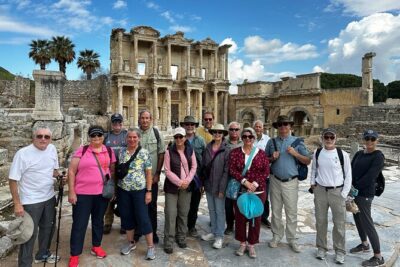
ALL INCLUDED: Ephesus Ruins, Mary’s House Tour incl ENTRY TICKETS
Read our review →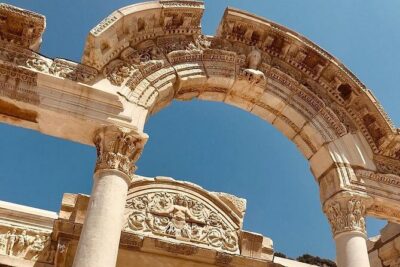
Ephesus Temple of Artemis and House of Mary Private Half Day Tour
Read our review →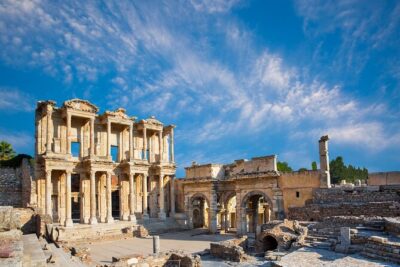
PRIVATE TOUR FOR CRUISERS: Mary’s House (Meryemana) and Ephesus
Read our review →Lists this tour turns up in