Reviewed · ISTANBUL TOURS & ACTIVITIES
Fener and Balat – Old Greek & Jewish Quarter
Colorful steps, big stories, no crowds. In this small-group afternoon walk, I love the way Fener and Balat feel like everyday Istanbul, not a theme park. I also love the Golden Horn finish at Pierre Loti, where a simple cup of tea turns the view into a memory. One consideration: this tour has hills and lots of stairs, so wear shoes you trust.
You meet at 2:00 pm and head into the older western side of the city walls, moving through neighborhoods that long included Greek Orthodox and Jewish communities side by side. The group stays small, up to 10 people, so you can ask questions and actually hear what your guide points out.
If you want a “sit and see” tour, this is not it. You’ll be walking for about 3 hours, and some people rack up around 11,000 steps, including steep, narrow streets.
In This Review
- Key highlights worth planning around
- Where Fener and Balat fit in Istanbul’s story
- The tour price and what makes it feel like value
- Your 2:00 pm start and the pacing reality
- Stop 1: Fener Rum Patrikhanesi and the Greek Orthodox thread
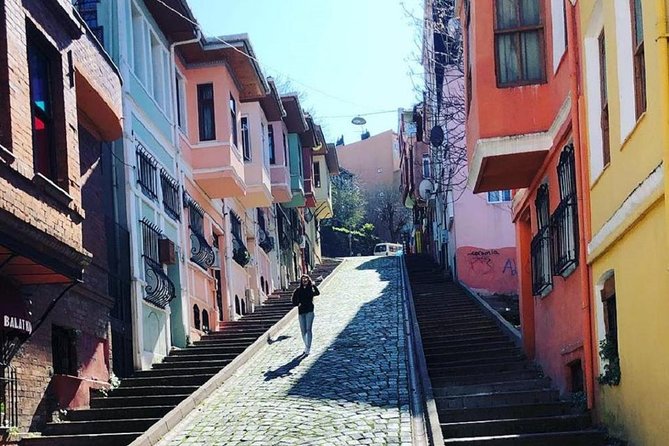
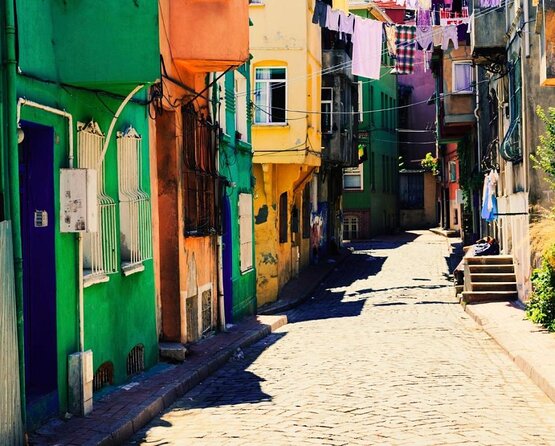
- Stop 2: Balat’s colorful houses, steps, and real streets
- Stop 3: Halic and the Golden Horn connection
- Stop 4: A Bulgarian Orthodox Church stop (and why it matters)
- Pierre Loti cafe: tea with a view, not just a postcard
- Public transport tips you can use later
- What to expect on the ground (walking, photos, and comfort)
- How the guide shapes the experience
- Food moments: small breaks that taste local
- Who this tour suits best
- Should you book Fener and Balat?
- FAQ
- How long is the Fener and Balat tour?
- What time does the tour start?
- What is the group size and language?
- Where do you meet, and where does the tour end?
- What does the tour include in terms of stops?
- Is there free cancellation?
Key highlights worth planning around
- Fener Rum Patrikhanesi start: begin with a major Greek Orthodox site and set the Ottoman-era context fast
- Balat streets and houses: colorful homes, religious architecture, and residential life you won’t get from the main sights
- Halic and the Golden Horn walk: along-the-water history lessons, including the fall of Constantinople
- Bulgarian Orthodox Church stop: a quieter peak into the city’s layered Christian communities
- Pierre Loti cafe time: tea with big views, often paired with local warm drinks
- Public transport tips in real time: you learn routes you can reuse later in your trip
Where Fener and Balat fit in Istanbul’s story
Istanbul’s “old town” gets most of the attention, and that’s fair. But I like the fact that this tour takes you to the neighborhoods that feel older in the lived-in sense. You move through places where people actually go about their day, not just where visitors stop for photos.
The value here is not just the sights. It’s the context your guide gives you while you’re walking: how different communities shared space, how buildings changed over time, and how the city’s walls and waterways shaped everyday life.
And yes, it’s colorful. Balat’s steps and facades make instant sense in your photos. But the better part is that you’re seeing color inside a real neighborhood rhythm, with small storefronts, street corners, and small breaks built in.
What Istanbul regulars wave over next



The tour price and what makes it feel like value
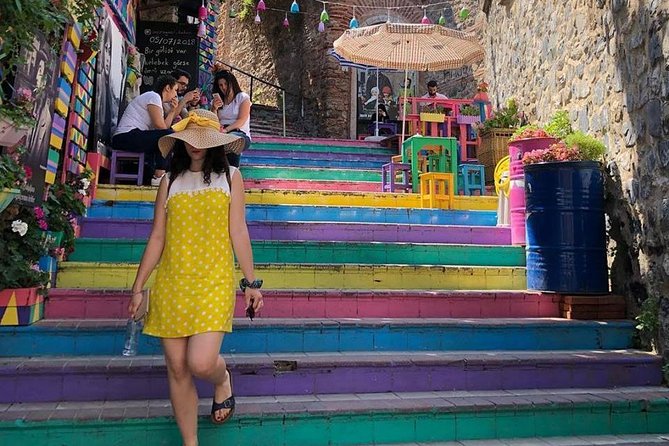
At $60.34 per person for about 3 hours, you’re paying for something that’s hard to fake on your own: a guided route through multiple districts with history tied directly to what you see.
Two things make it good value for many visitors:
- Small-group size (up to 10) means less crowd pressure and more time to ask questions.
- Transportation know-how built into the outing helps you get oriented, even if you’re not using the same route every day.
Is it the cheapest thing in Istanbul? No. But when you factor in the time you save, the guided context, and the fact that you leave the main tourist lanes, it often feels worth it.
Your 2:00 pm start and the pacing reality
This runs from 2:00 pm. That’s smart. Late afternoon light can be good for Balat’s colors, and the Golden Horn area often feels calmer after the morning rush.
Pacing is steady. Plan on:
- walking through steep and narrow streets
- taking small breaks without turning it into a long café crawl
- doing enough steps that you’ll feel it afterward
One helpful detail from real experiences: people have counted roughly 11,000 steps for the tour alone. So if you’re traveling with older relatives or anyone who struggles on hills, consider whether the walking is a match.
Stop 1: Fener Rum Patrikhanesi and the Greek Orthodox thread
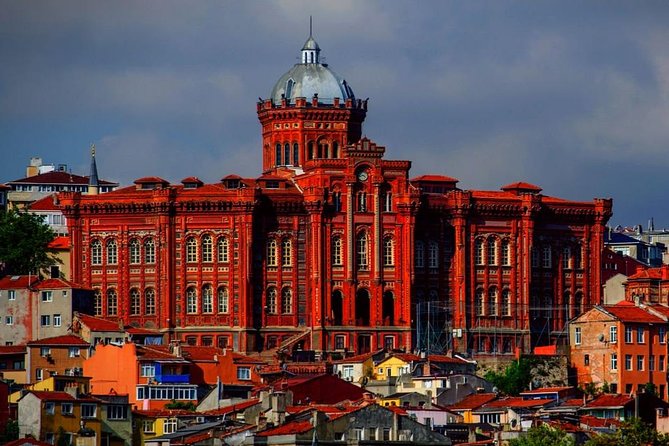
The tour begins at Fener Rum Patrikhanesi, the Fener Greek Orthodox Patriarchate area. Even if you’re not a religious-sites person, this is a strong starting point because it anchors the neighborhood’s identity.
What I like about starting here is that it sets up the rest of the afternoon. From this area, the guide can connect architecture, community history, and the city’s shifting power centers. You’re not just collecting landmarks. You’re getting a framework you can use as you keep walking.
The drawback? If you’re hoping for short, easy stops with minimal explanation, you might feel the tour is information-heavy. This is a history and neighborhood tour, not a photo-only stroll.
Still on the table in Istanbul:
- Istanbul: Basilica Cistern Fast-Track Entry and Audio Guide★ 4.6 · 7,521 reviews
- Istanbul: Hagia Sophia Skip-the-Line Ticket & Museum Option★ 3.7 · 4,958 reviews
- Istanbul: Hodjapasha Whirling Dervishes Show & Exhibition★ 4.4 · 4,790 reviews
Stop 2: Balat’s colorful houses, steps, and real streets
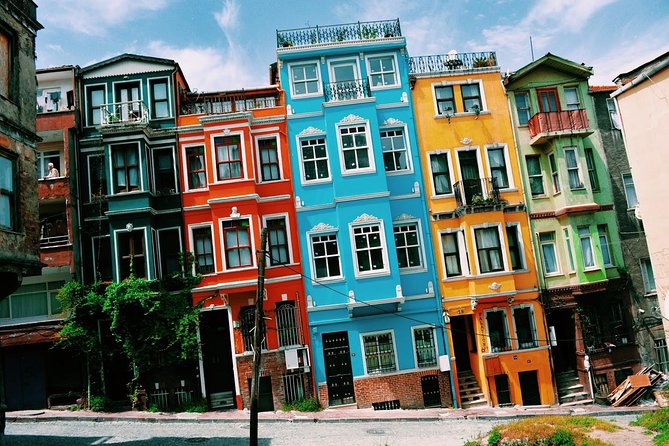
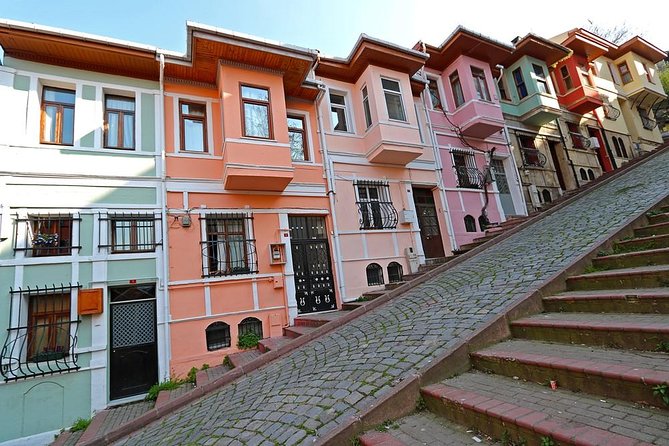
Balat is the part many people picture when they think of this route, and for good reason. Expect colorful facades, stepped streets, and that satisfying feeling of being in a residential area where life continues around you.
This is also where the tour often clicks for first-time Istanbul visitors. Once you’ve walked a few blocks here, you understand why this side of the city feels different from the central monuments. It’s not just old. It’s lived in.
A few practical tips for Balat:
- Expect uneven pavement and narrow passages.
- Stop for photos, but don’t get so absorbed that you miss the guide’s explanations about what changed over time.
- If rain hits, you’ll still want to keep moving, but you may feel the steep bits more on wet streets.
Stop 3: Halic and the Golden Horn connection
Next is the Halic area, which lines up with the bigger water story: the Golden Horn. Walking by the water is when the tour’s “how the city worked” lesson becomes easier to grasp.
This is also where you get more direct history, including a lesson tied to the fall of Constantinople. Even if you’ve heard the headline version before, it lands differently when you’re seeing the shoreline and thinking about why empires cared about these edges.
I like this stop because it bridges past and present. The Golden Horn is not just scenery. It’s geography, and geography is destiny in Istanbul.
Stop 4: A Bulgarian Orthodox Church stop (and why it matters)
The itinerary includes a stop at a Bulgarian Orthodox Church. This kind of stop is easy to skip if you’re moving fast through the city, but it’s exactly what makes this tour feel more layered.
You’re seeing how multiple Christian traditions shaped the neighborhood over centuries. It’s not just one community, one landmark, one timeline. It’s overlapping influences.
One practical note: churches can have moments where you need to pause quietly and follow any on-site guidance. If you’re planning a lot of indoor time elsewhere that day, this tour can still fit, but keep expectations flexible.
Pierre Loti cafe: tea with a view, not just a postcard
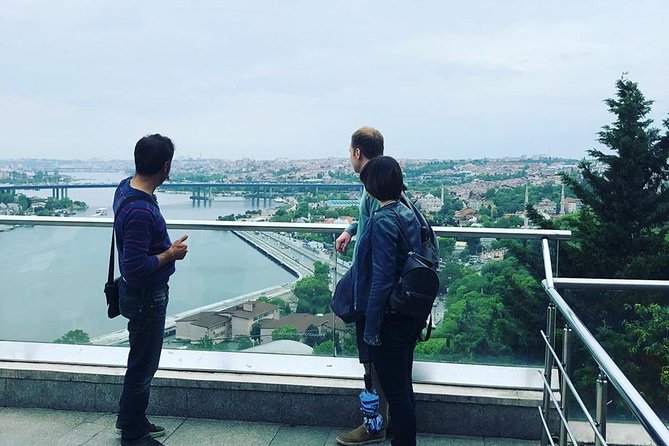
The afternoon’s “slow down” moment is typically the Pierre Loti area, where you spend time at a café viewpoint. People often describe this as one of the best parts because the tea changes the feel of the whole walk.
In real experiences, the treat is often a glass of çay (tea) with a Golden Horn or wider Istanbul view. Some groups also mention warm drinks like sahlep during colder weather. If you get that kind of break, it’s a simple reward that makes the hill walking feel worth it.
This is also a good time to take a breath and check where you are. When the view opens, the history lesson makes more sense. You can stand there and think, Okay, this is why people fought and traded here.
Public transport tips you can use later
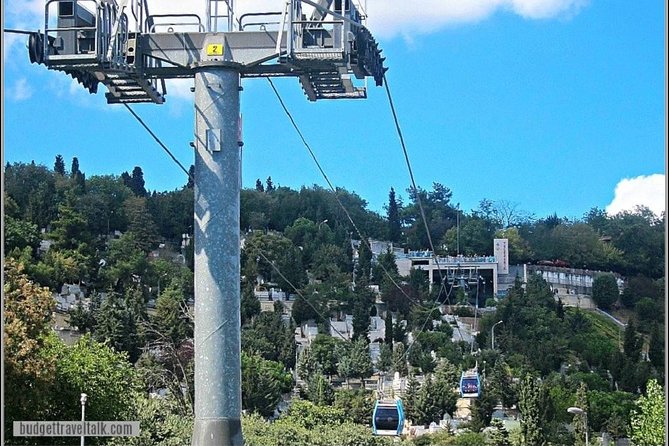
One underrated part of this tour is how it helps you understand Istanbul as a moving city. You’ll get practical guidance about using public transport, and in some outings you’ll see a mix of local routes such as tram and ferry, depending on the day.
I like this because it’s not just theory. You learn what to look for, which directions matter, and how to get back without panic.
If you’re doing a lot of sightseeing over the next few days, that “I can figure it out” confidence is worth real money.
What to expect on the ground (walking, photos, and comfort)
Let’s be honest. This tour is for people who like walking.
Based on multiple experiences, you should plan for:
- steep hills and lots of stair-like streets
- narrow lanes where you may need to pause for oncoming pedestrians
- walking surfaces that can be rough underfoot
Photo fans should know this: the tour pace is not built around long photography sessions. You can still get great shots, but you may have to capture quickly and keep moving so you don’t lose the story behind each view.
Comfort upgrades:
- wear grippy shoes
- bring water
- keep your phone battery ready if you’re planning lots of stops
How the guide shapes the experience
The biggest difference-maker is the guide. Across experiences, names like Salih, Önder, Omar, Sahli, Burak, and Barak come up, and the consistent theme is strong neighborhood context with a friendly, helpful approach.
Some guides also handle “on-the-fly” interests well. For example, one group mentioned the guide accommodated an extra church stop request, which shows the tour can be flexible without losing its structure.
If you’re the kind of traveler who likes asking questions, bring that energy. One review noted that where the explanation is hard to follow, the tour may feel like it’s moving on without you. So if English is a concern, it’s smart to gauge your own comfort with history talk in a group setting.
Food moments: small breaks that taste local
This isn’t a “food tour,” but it does build in small treats that make the neighborhoods feel more real.
Common food-and-drink mentions include:
- Turkish treats and tea during the afternoon
- homemade lemonade at a local café stop
- small snacks at a rooftop-style restaurant in some routes
- warm drinks on cooler days, including sahlep
The point is not the meal itself. It’s that these breaks happen in the neighborhood, not in a tourist strip. You get to rest while still staying inside the city’s daily rhythm.
Who this tour suits best
This is a good fit if you:
- want a break from the main historic center
- love neighborhoods, architecture, and community history
- enjoy walking and hills as part of the adventure
- want public transport guidance you can actually use
It may not be the best fit if you:
- need a mostly flat route
- want long museum-style stops
- prefer minimal walking and minimal explanation
- have trouble following English at a fast pace
Should you book Fener and Balat?
Here’s my straight take: if you’re curious about Istanbul beyond the usual monument circuit, book it. The tour gives you a structured path through Fener, Balat, the Golden Horn, and the Pierre Loti viewpoint, plus the kind of local orientation that makes your next days easier.
I’d skip it or choose an alternate option if you know you can’t handle steep walking, even with a moderate pace. Also, if you need very simple, low-information guiding, the history and community context may feel like a lot.
If you do book, go in with the right mindset: shoes on, phone charged, and an expectation that the best parts will be the walk itself, the stories you hear along the way, and that tea moment when the city finally opens up.
FAQ
How long is the Fener and Balat tour?
The tour is about 3 hours.
What time does the tour start?
It starts at 2:00 pm.
What is the group size and language?
It’s a maximum of 10 travelers, and it’s offered in English.
Where do you meet, and where does the tour end?
You meet at İtimat Fabrika Satış YeriRüstem Paşa, Avrupa Yakası, 34116 Fatih/İstanbul, Türkiye. The activity ends back at the meeting point.
What does the tour include in terms of stops?
The itinerary includes stops at Fener Rum Patrikhanesi, Balat, Halic, and a Bulgarian Orthodox Church, with time near Pierre Loti and the Golden Horn.
Is there free cancellation?
Yes, free cancellation is available. You can cancel up to 24 hours in advance for a full refund. The experience may also be changed or refunded if canceled due to poor weather.
Newest to reach the Istanbul table
- Istanbul: Full Day Private Guided Tour for Iconic Landmarks
★ 4.9 · 20 reviews - Private Yacht Cruise on The Bosphorus in Istanbul
★ 4.5 · 20 reviews - Chora Mosque and Balat Walking Tour with Sunset Cruise
★ 5.0 · 20 reviews - Istanbul Bosphorus Dinner Cruise: Turkish Night Show Experience
★ 4.5 · 20 reviews - 2-Day Private Istanbul to Ephesus Tour by Flight & Hotel
★ 5.0 · 20 reviews - Sapanca & Masukiye Full-Day Tour with Lunch and Transfers
★ 4.5 · 20 reviews
Istanbul Tours & Activities, side by side.

Bosphorus Dinner Cruise & Show with Private Table
Read our review →
Daytime or Sunset Sightseeing Cruise & Audio Guide
Read our review →
Bosphorus Dinner Cruise & Turkish Night Show
Read our review →
Best of Istanbul 1, 2 or 3-Day Private Guided Istanbul Tour
Read our review →
Basilica Cistern Fast-Track Entry and Audio Guide
Read our review →
Hagia Sophia Skip-the-Line Ticket & Museum Option
Read our review →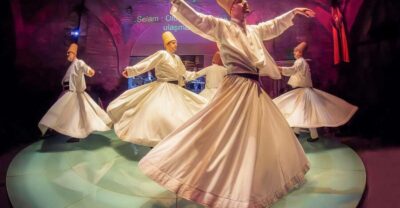
Hodjapasha Whirling Dervishes Show & Exhibition
Read our review →