
Reviewed · TURKEY
Gobeklitepe, The World’s First Temple
Gobeklitepe scrambles your sense of time. This private day tour links Göbeklitepe, Abraham’s Cave, and Harran in one long arc of history, from 12,000-years-old stone carvings to ancient religious traditions. You get picked up at GAP Şanlıurfa Airport, ride in an air-conditioned vehicle with onboard Wi-Fi, and end with a traditional Turkish dinner.
What I like most is how much you see without feeling rushed in the key places. You spend about 2.5 hours at Göbeklitepe, where the site is still being excavated by a German and Turkish team led by Dr Klaus Schmidt, so the story stays alive and human. I also like that the day uses smart pacing: Harran’s surreal beehive-style houses and the ruins are handled as walking stops, not just “drive-bys.”
One thing to consider is the price. At $377.30 per person, this is for travelers who want convenience and a guide-led day, not a budget DIY. Also, the distances mean you’ll spend solid time on the road, so bring a good playlist and settle in.
In This Review
- Key highlights worth planning around
- Entering Göbeklitepe without feeling like a tourist sprint
- Göbeklitepe, where religion and cooperation show up first
- Abraham’s Cave and Urfa’s fishpond legend
- Harran’s beehive houses and the odd magic of walking history
- Harran Ruins: the science and scholarship era
- Comfort and logistics: airport pickup, Wi-Fi, and a long day that stays manageable
- What you get for the price: convenience, time, and expert context
- Who should book this one
- Should you book the Göbeklitepe, Abraham’s Cave and Harran day trip?
- FAQ
- How long is the tour?
- Where does the tour start and is airport pickup included?
- What language is the tour offered in?
- What entrance tickets are included?
- Is this tour private?
- Is there Wi-Fi in the vehicle?
- Is the booking refundable?
Key highlights worth planning around
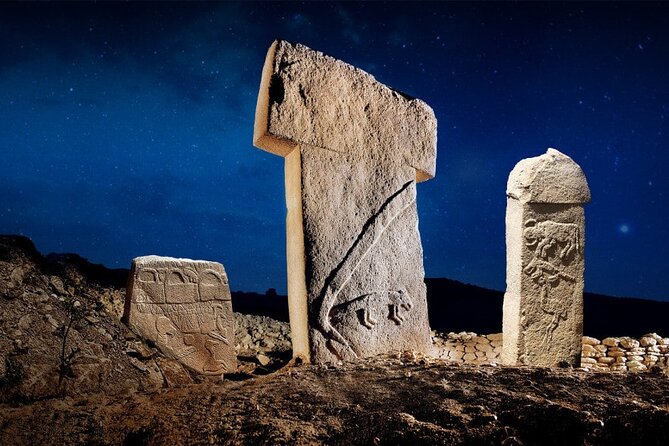
- 2.5 hours at Göbeklitepe to focus on T-shaped pillars, reliefs, and the still-unfolding excavation story
- Private air-conditioned vehicle with Wi-Fi and meet-and-greet pickup at GAP Şanlıurfa Airport
- Abraham’s Cave plus the fishpond legend near the Urfa citadel, a quick but memorable stop
- Harran’s beehive houses (Altınbaşa) and the Grand Mosque area with its square tower
- Harran Ruins time in the golden-era story, including scholars associated with the city
- Traditional dinner included at dusk before airport transfer
Entering Göbeklitepe without feeling like a tourist sprint
This day starts the moment you land. Your driver and guide meet you at GAP Şanlıurfa Airport, and you’re whisked into the tour with a short welcome intro about Urfa, also called Şanlıurfa, the City of Prophets. Expect context right away, including how the name Şanlıurfa connects to the heroism shown here after World War I, when Atatürk led the Turkish National Movement and then pushed major reforms to modernize the new republic.
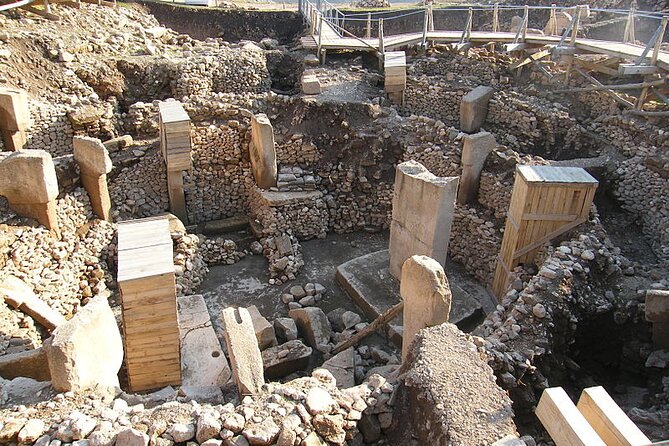
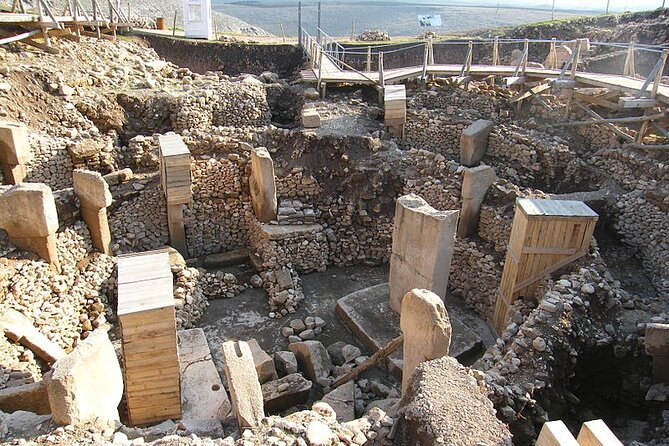
Then the main event: Göbeklitepe. This is not a museum-y “look but don’t touch” kind of site. It’s archaeology in active mode. Göbeklitepe is still being excavated by a German and Turkish team led by Dr Klaus Schmidt, which matters because it means explanations can evolve. You’re not just repeating old facts, you’re seeing how scholars build a picture from stone.
Over a second glass of tea in Sanliurfa, talk turns to these:
Göbeklitepe, where religion and cooperation show up first
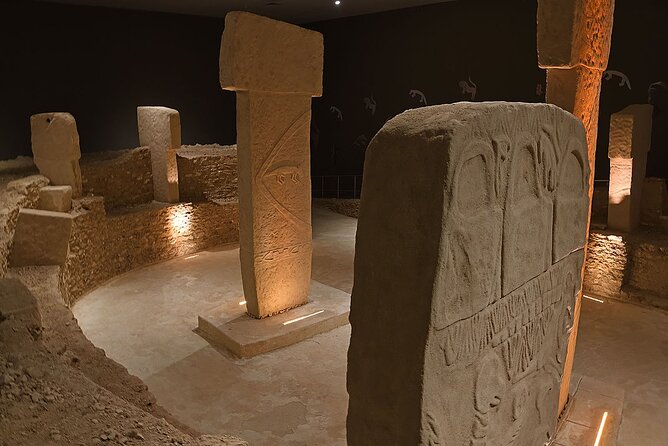
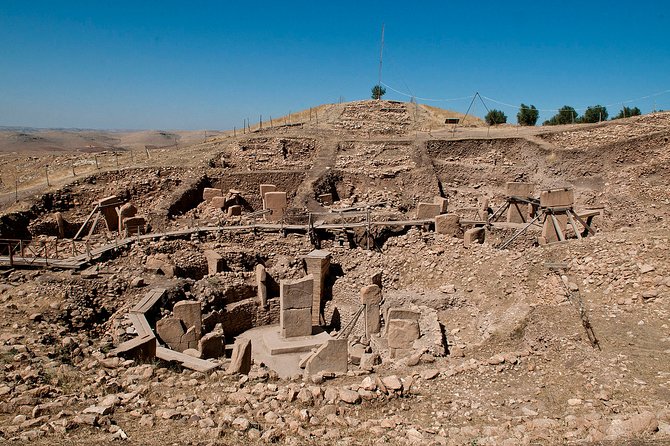
Göbeklitepe is built far earlier than most people expect for something that looks like a temple complex. The site dates to about 12,000 years ago, bridging the Mesolithic Age and the Pre-Pottery Neolithic Age. In plain terms, the big question this place raises is awkward and exciting: why would people build something monumental here, so early, and still make it detailed enough to carry stories?
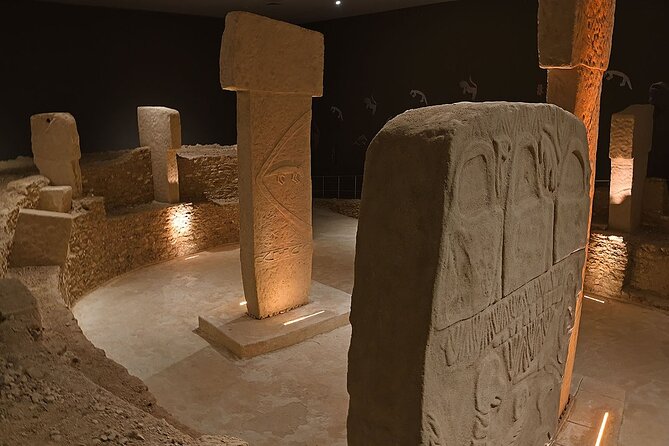
At the site, you’ll focus on the signature architecture and carvings:
- T-shaped pillars, including the famous central pillar layout
- Reliefs of wild plants and animals that give the stone a living feel
- Decorative belts and engraved bands on pillar surfaces
- Stylized human figures, including a bird image with a human face
- Engravings of a female person
- Notable carvings like the Urfa Statue, the skin-head, and other described sculpture highlights
- Human-scale details, including a life-size human head and a man with a beard
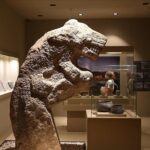
- Stone elements described as a porthole stone and a high-relief predator scene on a slab
A lot of people get stuck on “it’s old.” I love how this tour pushes you past that into pattern recognition. You start to notice that the carvings aren’t random decoration. They look like symbols meant to be seen by a group, over and over. That’s where the experience becomes more than “pretty rocks.” It nudges you to think about shared work, shared beliefs, and shared gatherings. Even if you don’t care about theories, you’ll still feel the site’s intent.
Timing is solid here too. You get about 2 hours 30 minutes, which is enough time to look carefully without the pressure of constant moving.
Abraham’s Cave and Urfa’s fishpond legend
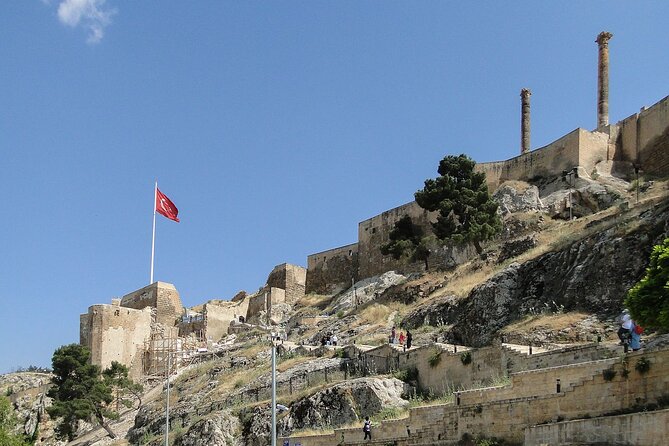
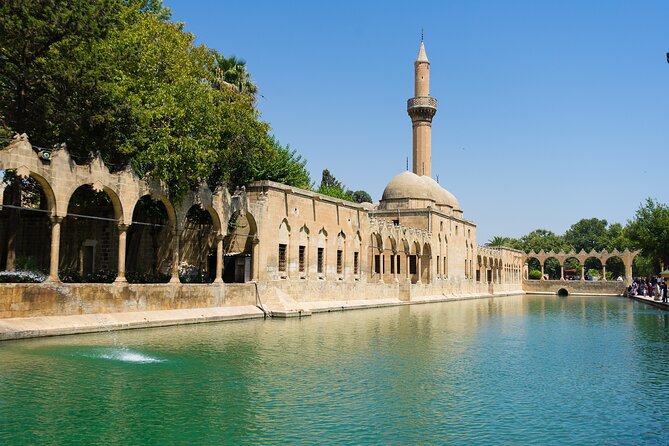
After Göbeklitepe, the plan shifts back into Urfa’s daily life and legends. Next stop is Abraham’s Cave, located near the Urfa citadel, plus the holy fishpond. This is a shorter stop, about 30 minutes, but it’s a good rhythm reset after the intensity of Göbeklitepe.
The legend is specific and memorable: a great fire where the pond is now. When Prophet Abraham fell into the fire, it is said the fire turned into a huge pond, and the woods became fish. It’s not the same kind of evidence you get at an archaeological site, but it’s part of why this region remains a living story. You see the way belief and place overlap, and you get to connect a modern religious landscape to ancient setting.
If you prefer your stops to be visually dramatic, you might wish this part lasted longer. But as a breather, it works, and it keeps the day from turning into one long “history overload.”
Harran’s beehive houses and the odd magic of walking history
Then you head to Harran, an ancient city famous across multiple faith timelines. The tour frames Harran as a place with early mentions in Genesis and also as a city tied to Abraham in the Torah. It also links Harran to a temple of the Moon God, Sin, which is part of what makes the town feel like layers on layers.
Here’s what you’ll actually do on the ground:
- Walk around the area near the Altınbaşa beehive houses (surreal, low, rounded homes)
- Visit the Grand Mosque area, including the square tower built by an Arab Caliph in the 18th century
- Explore the central pool area
- See remnants associated with an Arab University, described as one of the earliest universities in history
The tour also gives you the long sweep of who ruled or lived here over time: Akkadians, Babylonians, Assyrians, Hittites, Persians, the Alexandrian Empire, Romans, Byzantines, Seljuks, Ayyubids, and more. You don’t need to memorize that list. What you should take away is that Harran stayed relevant because of trade, learning, and religion.
Admission for this segment is described as free, and the time here is about 1 hour. That’s brisk, but Harran works well for a walking-and-looking stop. If you love slow wandering, you’ll probably want extra time on your own after the tour.
Harran Ruins: the science and scholarship era
After Harran proper, the day continues to Harran Ruins, about 45 minutes. This is where the story gets sharp and specific: Harran was known for cotton, honey, sweets, and measuring tools. Then it hits a “golden era” window from 718 to 913, when the city functioned as a cultural and knowledge center.
You’ll hear names tied to Harran’s scholarly reputation, including:
- Thabit Ibn Qurra (826-901)
- Al-Battani (858-929)
- Ibn Taymiyyah (1263-1328)
Then the tour history explains decline and damage. Harran weakened under Abbasid rule, suffered more disruption during Crusade-related expeditions in 1098, regained influence under Salahaddin Al-Ayyubi (Saladin) with hospitals, bazaars, schools, and bathhouses, and then took a final blow in 1260 when Hulagu Khan invaded. Mongol troops destroyed key sites, including the Grand Mosque and city gates, and afterward Harran shrank into a small village.
This stop is quick, but it gives you something useful: it tells you this place mattered for practical science and learning, not only for spiritual symbolism. If Göbeklitepe is about early shared-building and belief, Harran Ruins helps you see how later societies built institutions around knowledge.
Comfort and logistics: airport pickup, Wi-Fi, and a long day that stays manageable
This is a private tour, so it’s only your group. That’s a big quality-of-life factor when you’re covering three major stops in one day. Instead of dealing with a bus schedule and strangers asking to stop for photos every 30 seconds, you can keep momentum where it counts.
The vehicle is air-conditioned with Wi-Fi onboard, plus you get bottled water and soda/pop. Those are small things that matter in the Şanlıurfa heat. One review described being in temperatures above 40°C and still enjoying breaks like an air-conditioned lunch stop, which matches the kind of comfort this format is built for.
You also get a dinner at dusk, described as a traditional Turkish meal included before your transfer back to the airport. That’s useful because at the end of a full day, you don’t want to figure out where to eat, then negotiate menus in a place you just met yesterday.
One practical note: the tour is designed for people with moderate physical fitness. Harran involves walking. Göbeklitepe involves looking and moving around uneven archaeological terrain. You don’t need to be an athlete, but you should feel comfortable with steady walking.
What you get for the price: convenience, time, and expert context
At $377.30 per person for about 8 hours, this is not a cheap day trip. So the question is value: what are you buying?
You’re paying for:
- Airport meet-and-greet pickup and drop-off, so you do not spend your energy on transfers
- A private guide in English and a structure that links sites logically
- Time where it matters: 2.5 hours at Göbeklitepe, not a token stop
- Comfort upgrades: air-conditioning, Wi-Fi, and bottled water
- Included basics: entry for Göbeklitepe and Harran Ruins, plus dinner
If your goal is simply to check boxes, you could DIY parts. But if you want your time in Şanlıurfa to feel planned and coherent, this format is built for that.
The main drawback is that you’re paying a premium and still spending time in the car because the locations are far enough apart to add up. If you’re the type who hates road time, this won’t magically fix that.
Who should book this one
This tour is a great match if you:
- Care about archaeology and want Göbeklitepe explained by a guide, not just read off a sign
- Like religious history and how legends connect to physical places
- Want a full-day hit of Şanlıurfa and Harran without managing logistics
- Are landing at GAP Şanlıurfa Airport and want a smooth start
It might not be for you if:
- You’re traveling on a tight budget and want to keep every cost down
- You prefer slow travel with long stays in fewer places
- You dislike long car rides and packed days
Should you book the Göbeklitepe, Abraham’s Cave and Harran day trip?
Yes, if you want a single day that covers three major stops with guide-led context, airport pickup, and comfort. The standout value is the time at Göbeklitepe plus the way the day connects it to later belief traditions in Urfa and Harran.
If the price makes you wince, be honest with yourself about what you’re buying. You’re not just buying sites, you’re buying a guide, transport, and a plan that keeps you from wasting time figuring things out. I’d book it when your schedule is tight, your interests are history-heavy, and you want your day to feel smooth from landing to dinner to the ride back.
FAQ
How long is the tour?
The duration is approximately 8 hours.
Where does the tour start and is airport pickup included?
It starts at GAP Şanlıurfa Airport, with airport meet-and-greet pickup and transfer included.
What language is the tour offered in?
The tour is offered in English.
What entrance tickets are included?
Admission ticket details vary by stop: Göbeklitepe and Harran Ruins include admission tickets, while Harran and the Abraham’s Cave fishpond stop are listed as admission free. Dinner is included.
Is this tour private?
Yes. It is private, and only your group participates.
Is there Wi-Fi in the vehicle?
Yes. Wi-Fi on board is included.
Is the booking refundable?
No. This experience is non-refundable and cannot be changed for any reason.
Newest to reach the Sanliurfa table
- Daily Gobeklitepe Private Tour
★ 5.0 · 35 reviews