
Reviewed · BASILICA CISTERN VISITS
Istanbul: Basilica Cistern Skip-the-Ticket Line Entry
Columns under Istanbul chill you fast. Basilica Cistern is a cathedral-sized underground reservoir with a marble-column forest and the famous Medusa heads, lit in a cinematic way. I like that the skip-the-ticket-line option gets you inside faster, and I like having an optional audio guide in 25 languages so you can pace your visit at your own speed.
The main thing to watch is the setting itself: the cistern runs extremely humid (up to 96%), with water that may drip from the ceiling, so protect your phone and anything you care about.
In This Review
- Key things to know before you go
- Basilica Cistern in context: what 30 minutes buys you
- Skip-the-ticket-line value: faster entry without the stress
- Entering the cistern: 52 steps, thick walls, and a temperature drop
- The Justinian engineering story: aqueducts you can almost picture
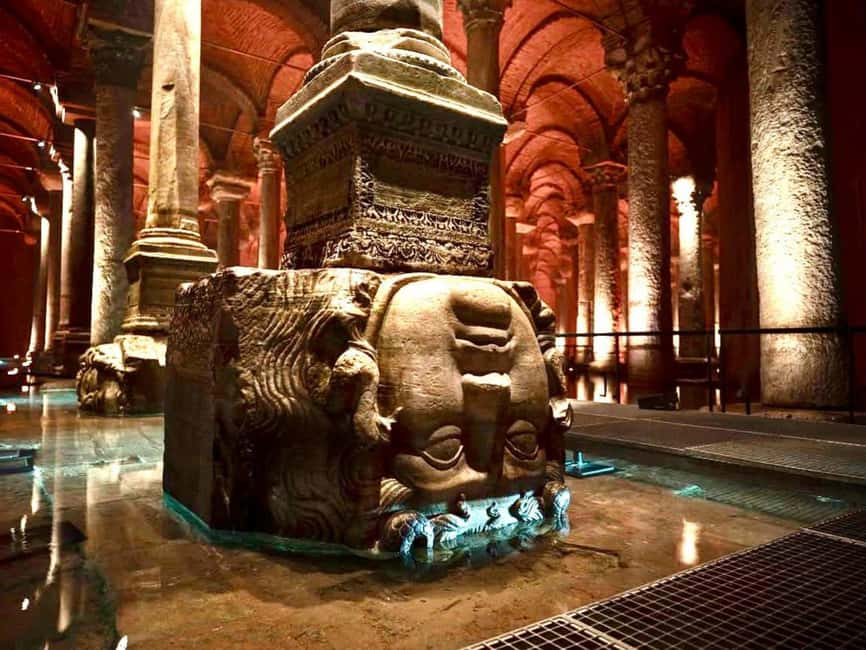
- Marble columns and the Medusa heads: what to look for
- Light, photos, and the Golden Horn and Bosphorus views
- Audio guide in 25 languages: use it like a tool, not a background track
- Guided tour option: short, focused, then your time to wander
- Humidity, noise, and occasional surprises during restoration or exhibitions
- What this experience is best for
- Price and logistics, with a reality check
- Should you book this Basilica Cistern skip-the-ticket option?
- FAQ
- How long is the Basilica Cistern experience?
- What is included with the skip-the-ticket-line entry?
- Can I visit Basilica Cistern any day?
- When do the guided tours run?
- Where do I meet for the guided tour?
- Is the audio guide available in many languages?
- Do I need internet for the audio guide?
- Is there Wi-Fi inside the cistern?
- What do I need to bring for entry?
- Are there rules about touching or interacting with the water?
Key things to know before you go
- Skip-the-ticket-line entry saves time at the gate, especially during busy hours.
- 25-language audio guide lets you read the room in your preferred language at your pace.
- The Justinian water story explains how the cistern fed the Great Palace with a huge aqueduct system.
- Medusa heads and marble columns are the visual anchors, with great photo spots if you stay respectful.
- Humidity is real: bring a plan for condensation and dripping water.
- Guides with names like Oguzhan and Emre Eriskon often focus on clear stories and key details, then leave you time to wander.
Basilica Cistern in context: what 30 minutes buys you
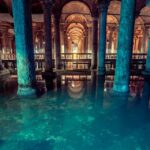
Basilica Cistern is one of those Istanbul sights where the name sounds religious, but the purpose is pure engineering. Built in the 4th century and expanded in 532 AD under Emperor Justinian I, it served as a massive Byzantine-era underground water reservoir. If you only have a short window, the 30-minute experience is long enough to see the core highlights without feeling rushed.
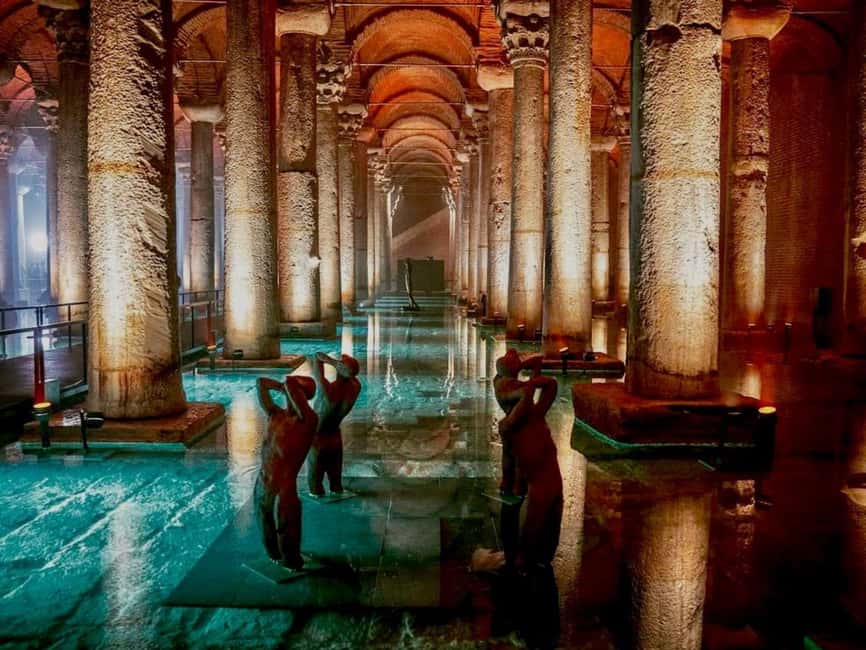
You enter, descend the stone steps, and then you’re surrounded by a grid of marble columns disappearing into darkness and mist. That atmosphere is part of the draw, but it also makes timing important. Go in ready to move, and you will leave with a clear sense of why this space is so famous in movies, art, and imagination.
More columns below street level:


Skip-the-ticket-line value: faster entry without the stress
At $62 per person for a 30-minute visit, the big question is value. Here, the value is mostly time. The cistern gets crowded because it is compact, iconic, and easy to fit into a sightseeing day. With skip-the-ticket-line entry, you reduce the chance of losing your coolest minutes to standing in the sun.
It is also worth noting that security checks are mandatory even with a ticket, so the line you avoid is the ticket queue, not security. During peak periods, you may still wait a bit at checks, but getting into the cistern sooner generally means more comfortable photos and a smoother start.
If you like first-in-the-day plans, the guided option can help you avoid the worst congestion. People also appreciate the “walk right in” feeling when they are early enough to beat the crowd wave.
Entering the cistern: 52 steps, thick walls, and a temperature drop
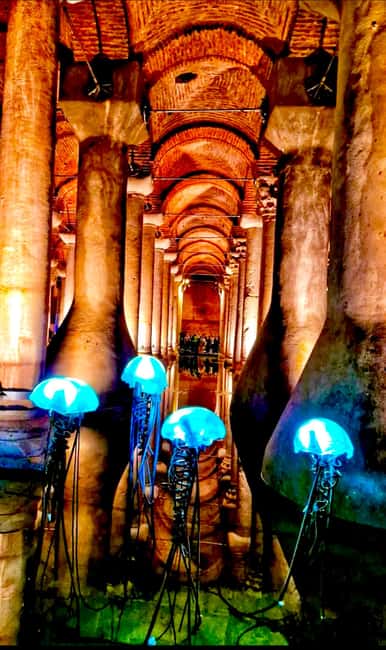
The experience begins the moment you start down. The cistern entrance is reached by descending fifty-two stone steps, and that vertical shift matters more than you might expect. Your ears feel the change first, then your skin does: even on a hot day outside, the cistern can feel cooling.
Once inside, you are in a cathedral-size chamber framed by a firebrick wall. The wall is coated with waterproofing mortar, and it is thick enough to help keep the reservoir stable. You are not just touring a room, you are walking into a sealed piece of infrastructure designed to hold water and keep it from evaporating away.
Practical note: water may drip from the ceiling, and the humidity can spike. If you bring a camera or phone, keep it dry with a small cloth and consider a waterproof phone pouch if you have one.
The Justinian engineering story: aqueducts you can almost picture
What makes Basilica Cistern more than an impressive interior is the way the space connects to Istanbul’s past water supply. The cistern stores up to 80,000 cubic meters of water. That supply came through a wide aqueduct network, with water delivered via about 20 kilometers of aqueducts from a reservoir near the Black Sea.
A strong guided option, or a well-used audio guide, helps you turn what you see into a mental map. You can learn that the water was distributed through the Eğrikapı Water Distribution Center in the Belgrade Forest, then carried through the Valens Aqueduct (about 971 meters) and the Mağlova Aqueduct (about 115 meters), commissioned during Justinian’s reign.
In other words, the cistern is not random underground decoration. It is the Byzantine version of a city lifeline. When you understand that, the columns feel less like a set piece and more like a functional forest built to hold up a water system at massive scale.
What Istanbul regulars wave over next
- Istanbul: Bosphorus Dinner Cruise & Show with Private Table★ 4.8 · 62,058 reviews
- Istanbul: Daytime or Sunset Sightseeing Cruise & Audio Guide★ 4.8 · 14,430 reviews
- Istanbul: Bosphorus Dinner Cruise & Turkish Night Show★ 4.8 · 12,954 reviews
Marble columns and the Medusa heads: what to look for
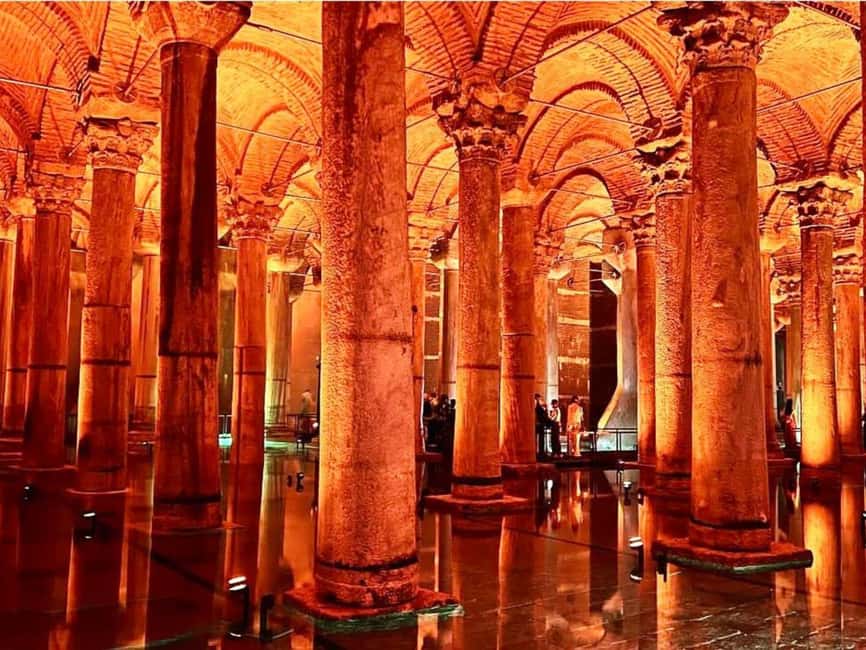
The visual core is the marble-column forest. You are looking at rows of columns that rise out of a dim, reflective space. Because the cistern holds water and mist, the whole room can feel slightly unreal, like it is lit for a film scene.
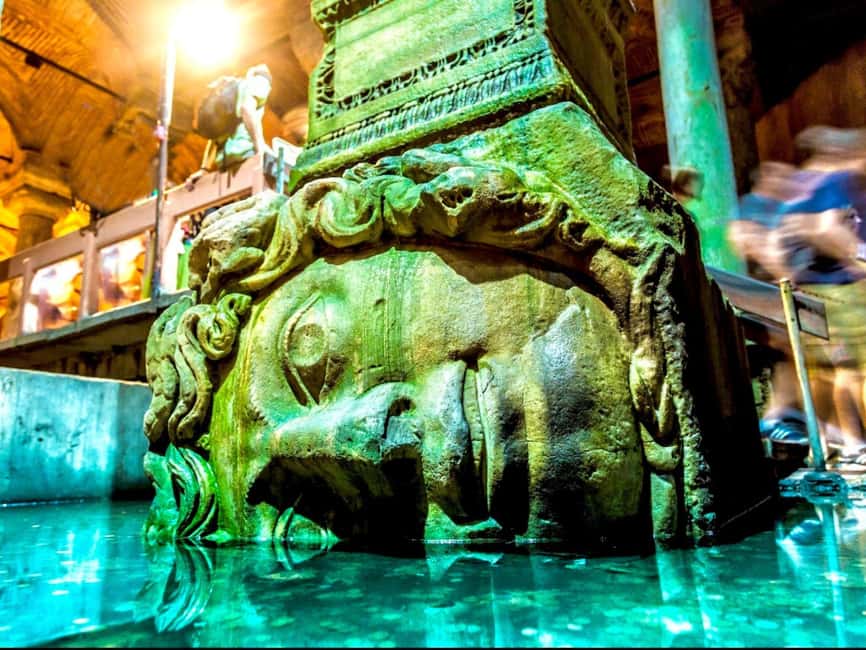
Then there are the Medusa heads, the cistern’s signature mystery. They are inspired by Greek mythology and they are famous enough that many people come straight for them. If you spend even a few minutes focusing on their placement and the way they sit among the columns, you will quickly see why this site has stayed iconic for centuries.
Two small tips for enjoying this part:
- Move slowly, give space to other photo takers, and you will get better angles.
- Use your audio guide or a short guide stop to connect the Medusa story to the broader myth tradition, rather than treating it as a random decoration.
Light, photos, and the Golden Horn and Bosphorus views
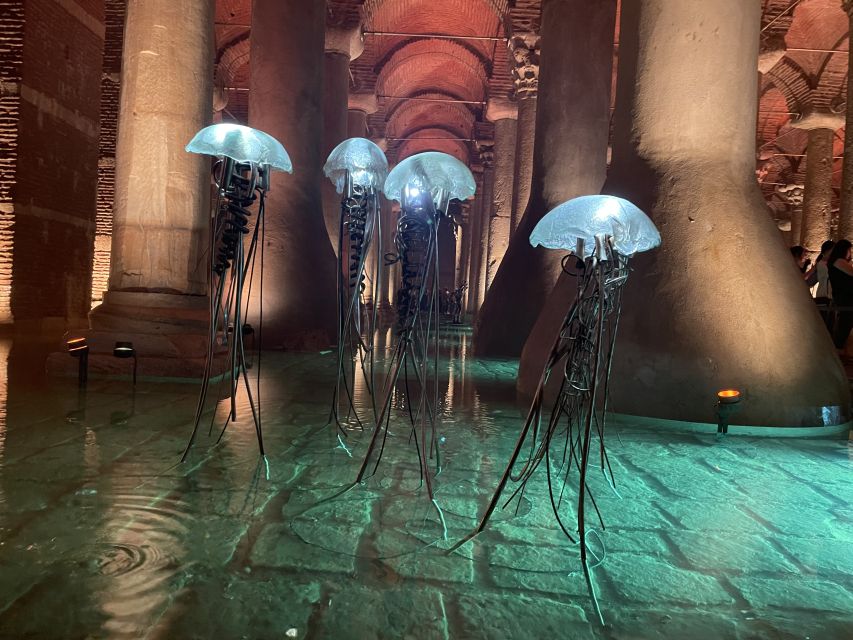
Basilica Cistern is often lit with colorful lighting, and that lighting can completely change your experience. Some visits feel like a calm museum. Others feel like a stage set. Either way, the lights help you read the scene, especially if you are standing in the darker sections.
You may also find moments where the cistern gives views toward the Golden Horn and Bosphorus, based on how the space is arranged and lit. Even if those viewpoints are framed or indirect, they add a helpful Istanbul contrast. You see this underground world, then your mind snaps back to the city above it.
Photo reality check: the cistern’s humidity and dripping ceiling mean you should keep lenses protected and wipe condensation quickly. It is not about being fancy, it is about not ruining the shot you waited for.
Audio guide in 25 languages: use it like a tool, not a background track
If you choose the option with the audio guide, you get access in 25 languages. That list includes English, French, German, Spanish, Italian, Russian, Turkish, Arabic, and many others. You also get a link that is sent separately by email, tied to your QR code entry.
Here is the practical part: the cistern has no Wi-Fi access, so you need internet for the first download. Plan to download before you go, or at least while you still have a connection. The audio can then be used offline afterward.
Also, audio can be picky if your browser settings block it. Accepting browser cookies is part of getting the audio guide link to work properly. That is not glamorous advice, but it saves real time at the entrance.
If you prefer a self-guided visit, use the audio like this:
- Start with the sections that explain what you are standing in front of.
- Pause when you reach the Medusa heads so the story lands while you can still see the details.
- Skip around if you want more engineering, or more mythology.
Guided tour option: short, focused, then your time to wander
If you want a human guide, there are scheduled guided tour times daily except Friday: 10:30 AM, 1:30 PM, and 3:45 PM. Meet at Dsign Cafe at least 15 minutes early. The guide is easy to spot, carrying a purple and fuchsia umbrella.
This option is especially good if you like stories, because the best-guided experiences tend to connect:
- the cistern’s purpose,
- the Medusa heads’ role in the myth imagination,
- and the water system that fed it.
Guides you may encounter include names like Oguzhan, Oğuzhan Gürkcü, Emre Eriskon, Furkan, Ozy, Adam (Edem), and Augusto, based on past tour leadership. The consistent theme is that people value how guides explain key points, and then make space for you to explore on your own.
Duration stays short, so manage expectations. You likely get a quick tour around the main sights and then time to see the cistern at your pace. If you are the type who likes unhurried museum wandering, plan to linger after the guide portion.
Humidity, noise, and occasional surprises during restoration or exhibitions
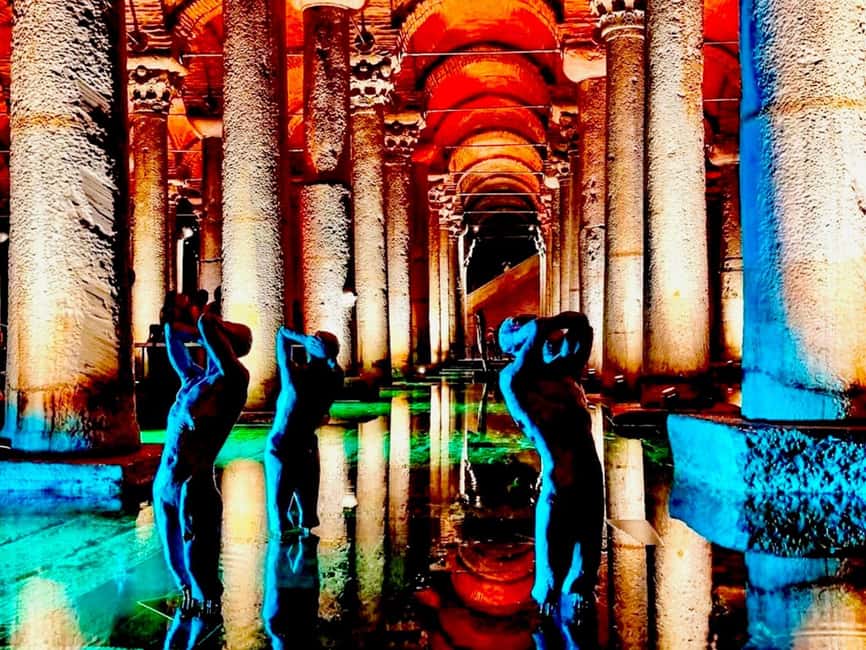
Basilica Cistern is famous for atmosphere, but it also has real-world conditions. Expect high humidity up to 96%. Water may drip from the ceiling. That means you should keep electronics protected and avoid leaving anything out of a bag.
Noise is another consideration. The cistern can have school groups, and sound can bounce in enclosed spaces. Some visits can feel noisy, and it can be harder to hear the guide in those moments. If you are sensitive to noise, arriving earlier can help, and using the audio guide when available can be a good backup.
Finally, the cistern may show things beyond its ancient setting. Some visits include modern installations or colorful lighting effects that might not feel strictly historical. Sometimes maintenance changes what you can fully see, because parts of the site have been under restoration at times. The safe takeaway is simple: go with the mindset that the cistern is old infrastructure, and the present-day presentation can shift.
What this experience is best for
This is a strong fit for:
- First-time Istanbul visitors who want one iconic, photo-friendly stop that still has serious context.
- People who like myths and symbols (the Medusa heads) mixed with engineering facts (aqueducts and reservoir capacity).
- Anyone who wants a short, efficient activity, since 30 minutes is enough for the main story beats and highlights.
It is also a nice contrast break if you are doing a hot-weather itinerary. Several people describe the cistern as surprisingly cooling compared to outdoors, and that cooling effect can make it feel like a true pause in the day.
If you are traveling with kids, note that children under 15 must be accompanied by an adult. The site is compact, but the humidity and rules around water mean adult supervision is important.
Price and logistics, with a reality check
The price is $62 per person for the skip-the-ticket-line entry plus a 25-language audio guide option, when selected. Is it worth it? For most people, yes, if you care about saving time and want a guided context, or at least a strong audio layer.
If you are trying to stretch every dollar, consider this logic:
- The skip-the-ticket-line part is paying for reduced waiting and better use of your limited time.
- The audio guide part is paying for instant storytelling in your language without needing to track down a guide in the moment.
- You still get a short, focused visit length, so you are not paying for a long day tour you do not need.
Also remember: you will need a passport or ID card. And while your ticket gets you in, security checks are still part of the process, so arrive ready for that step.
Should you book this Basilica Cistern skip-the-ticket option?
If you want the fastest, simplest route into one of Istanbul’s most iconic underground sites, I think you should book it. The decision is even easier if you value time savings, prefer a short experience, or you do not want to gamble on hearing enough explanation without a guide.
Book especially if:
- you are short on time and want the “main sights, explained” version,
- you like myths plus practical history about how cities handled water,
- you want the audio guide in your own language and a quick download plan.
Skip or reconsider if:
- you are very sensitive to humidity and dripping water and you cannot protect your devices,
- you dislike even brief crowds and noise, since school groups can make the chamber louder,
- you hate the idea of short guided time and prefer a totally free-form museum-style meander (though you still can roam after the guided portion, the overall experience is built to be quick).
If you do book, do one thing that improves everything: download your audio guide before you arrive and keep your phone protected. Then go slow in the Medusa area, because that is where the whole story clicks.
FAQ
How long is the Basilica Cistern experience?
It is listed as 30 minutes.
What is included with the skip-the-ticket-line entry?
The included items are skip-the-ticket-line entry to the Basilica Cistern. An audio guide in 25 languages is included if you select the audio option.
Can I visit Basilica Cistern any day?
Yes. You can visit any day between 09:00 and 18:00 for the self-guided option.
When do the guided tours run?
Guided tours are offered every day except Friday at 10:30 AM, 1:30 PM, and 3:45 PM.
Where do I meet for the guided tour?
You meet at Dsign Cafe, and you should arrive at least 15 minutes early. The guide can be recognized by a purple and fuchsia umbrella.
Is the audio guide available in many languages?
Yes. The audio guide is available in 25 languages, including English, French, German, Spanish, Italian, Russian, Turkish, Arabic, and many others.
Do I need internet for the audio guide?
Internet is required for the first download because the cistern has no Wi-Fi. After downloading, the audio guide can be used offline.
Is there Wi-Fi inside the cistern?
No. Wi-Fi access is not included at the cistern.
What do I need to bring for entry?
You should bring your passport or ID card.
Are there rules about touching or interacting with the water?
Yes. Touching or entering the water is forbidden, and you should not remove or interact with wish coins.
Newest to reach the Istanbul table
- Istanbul Airport Transfers IST & SAW – Private Transfers
★ 4.0 · 20 reviews - Private Turkish Carpet Shopping at Historic Caravanserai
★ 5.0 · 20 reviews - Istanbul Topkapı Palace and Harem Guide Tour
★ 4.1 · 20 reviews - Private Istanbul Full Day 7 to 8 hours Guided Tours / Group opt.
★ 5.0 · 20 reviews - Istanbul Basilica Cistern Guided Tour | Skip-the-Line Access
★ 3.8 · 20 reviews - Çiğ Köfte Cooking Class/Night with Traditional Music At Home
★ 5.0 · 20 reviews
Basilica Cistern Visits, side by side.
Basilica Cistern Fast-Track Entry and Audio Guide
Read our review →
Basilica Cistern & Hagia Sophia with Optional Topkapi Palace
Read our review →

Combo: Hagia Sophia+Basilica Cistern Optional Topkapi Palace
Read our review →
Blue Mosque, Hagia Sophia, & Basilica Cistern Tour
Read our review →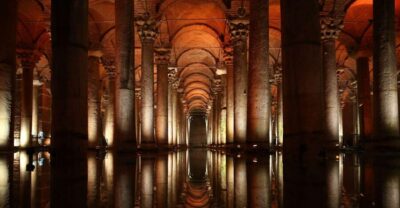
Basilica Cistern Skip-the-Line Entry & Audio Guide
Read our review →
Topkapi, Hagia Sophia and Basilica Cistern Tour
Read our review →
Basilica Cistern Guided Tour & Blue Mosque Audio Guide
Read our review →Lists this tour turns up in