
Reviewed · ANCIENT EPHESUS TOURS
Private Ephesus Bible Study Tour From Kusadasi Port
Bible sites, minus the cruise chaos. This private Ephesus Bible Study Tour from Kuşadası Port is built for cruise time, with a licensed English-speaking guide, skip-the-line ticket help, and a countryside lunch that keeps the day from feeling like nonstop standing around. I like that you get your own group experience in an air-conditioned van, not a packed bus.
I also love the Bible-shaped route through Ephesus, not just a list of monuments. You’ll walk major stops tied to early Christian stories, including the Great Theater, the Public Agora, and Marble Street leading to Celsus Library.
One thing to plan for: major entrance fees are not included (Ephesus, plus the House of the Virgin Mary and the Basilica of St. John). If you have a tight budget, you’ll want to add those up before you book.
In This Review
- Key highlights in this Kuşadası port Ephesus tour
- Why this private Ephesus Bible Study tour fits cruise days
- Meeting at Kuşadası Port without losing time
- How the half-day plan stays realistic (4 to 5 hours)
- Kuşadası Castle and the Öküz Mehmet Paşa Caravanserai: context before the ruins
- Ancient City of Ephesus: the Bible connections you can actually see
- Great Theater, Public Agora, and public life
- Marble Street and the Celsus Library photo spot that means something
- Temples, fountains, and the bonus “human scale” reminders
- Possible drawback: Ephesus needs comfortable shoes
- Meryemana, the House of the Virgin Mary: a calmer pause near Ephesus
- Basilica of St. John on Ayasoluk Hill: Byzantine-scale faith
- Temple of Artemis ruins: when you see religious layers
- Lunch in the countryside: why included meals make a difference
- Price and value: what the $30.10 covers, and what to budget next
- What to expect from your licensed English guide
- Practical tips so the day feels easy, not rushed
- Who should book this private Ephesus Bible Study Tour
- Should you book this tour or choose another option?
- FAQ
- Is this tour private or will I share it with other groups?
- How long is the Private Ephesus Bible Study Tour from Kuşadası Port?
- Does the tour include lunch?
- Are entrance fees included in the tour price?
- Where do cruise passengers meet the guide?
- What happens if weather is bad?
Key highlights in this Kuşadası port Ephesus tour
- Private, no-sharing format for your party, plus a dedicated driver and guide
- On-time cruise return built in, so you’re not gambling with ship schedules
- Ephesus and key Christian sites in one half-day plan, including Meryemana and St. John’s Basilica
- Skip-the-line ticket support arranged in advance to save time
- Lunch in the countryside included, a welcome break from ruins and heat
- Early meeting tips to help you dodge crowds at docking time
Why this private Ephesus Bible Study tour fits cruise days
From Kuşadası Port, most people come to Turkey for one big “I need to see this” day. This tour is designed to make that happen in 4 to 5 hours, without turning your schedule into a sprint.
You get private transportation in a non-smoking, air-conditioned van, with separate driving and a licensed local guide. That matters because Ephesus days have two energy drains: time lost in groups and time lost standing around. A private setup helps you keep momentum.
And since it’s explicitly a Bible study-focused format, the guide’s commentary is aimed at helping you connect the ruins to Christian stories, not just describe stones.
More of Ephesus underfoot, column by column:

Meeting at Kuşadası Port without losing time
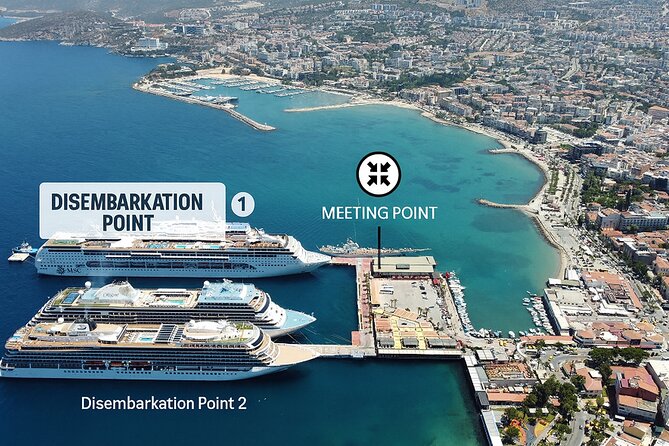
For cruise passengers, the meeting point is the Kuşadası Cruise Terminal. The operator keeps it practical: they’ll welcome you at the port exit gate with a sign showing your name, or help you in the hotel lobby if you’re land-based.
Your biggest advantage comes from timing. For cruise ships, they recommend meeting your guide around 30 minutes after you dock to avoid crowds and the worst heat. If your ship arrives before 7:00 AM, they suggest meeting at 7:45 AM. For later arrivals, aim for 30 to 45 minutes after docking.
That small window can make a huge difference in how calm the start feels, especially when multiple cruise ships are moving passengers at the same time.
How the half-day plan stays realistic (4 to 5 hours)
This is a compact route with six main segments. The day moves through Kuşadası first, then transfers to the Ephesus area for the heavy-hitter ruins and Christian pilgrimage stops.
The rough flow goes like this: a quick taste of Ottoman-era landmarks in Kuşadası, a longer visit to the Ancient City of Ephesus, then shorter but meaningful stops at Meryemana and the Basilica of St. John. The Temple of Artemis ruins are last, and then you’re back in time for the ship.
Because the operator emphasizes guaranteed on-time return, the itinerary is built around cruise reality. You’re not left wondering if you’ll make it back, which is a big deal on a port day.
Kuşadası Castle and the Öküz Mehmet Paşa Caravanserai: context before the ruins
Before you head into Ephesus, you get a breather in Kuşadası itself. It’s not a “tourist photo stop only” setup, either. It’s more like warming up your brain for the layer-cake history you’re about to see.
Kuşadası Castle sits on Pigeon Island, built during the Ottoman era for coastal defense. The guide frames it as protection against pirates and invaders, which gives you a better sense of why this coast mattered.
Then you pass the Öküz Mehmet Paşa Caravanserai, an Ottoman trade stop built in 1618. It functioned as a lodging and protection point for merchants moving between the East and West. Seeing the scale of the stone walls and the grand arched entrance helps you understand how travel, commerce, and culture moved through this region long before modern highways.
The trade-off is time. These are shorter stops, so go in expecting quick context rather than a deep museum-style visit.
What Kusadasi regulars wave over next
- For Ship Guests:BEST SELLER EPHESUS PRIVATE TOUR & On Time Return★ 5.0 · 2,029 reviews
- ALL INCLUDED: Ephesus Ruins, Mary’s House Tour incl ENTRY TICKETS★ 5.0 · 1,670 reviews
- Ephesus Temple of Artemis and House of Mary Private Half Day Tour★ 5.0 · 1,573 reviews
Ancient City of Ephesus: the Bible connections you can actually see
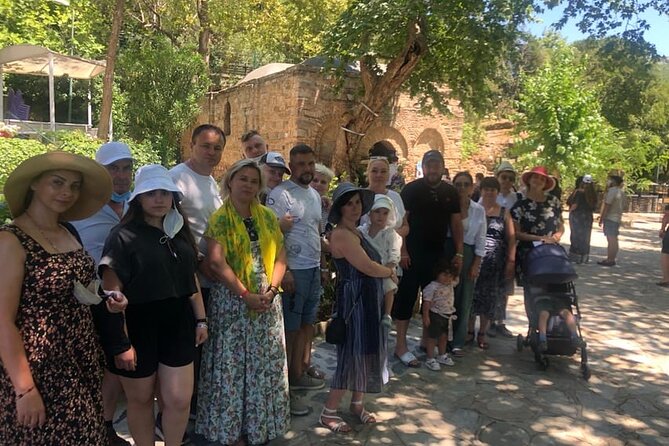
This is the heart of the tour, with around 2 hours in the Ancient City of Ephesus. And yes, Ephesus can feel overwhelming. The trick is knowing what to look at, and that’s where a Bible study angle is useful.
Great Theater, Public Agora, and public life
You’ll see the Great Theater, which seated over 20,000 people. The guide connects it to public events and gladiatorial battles, so you get a sense of what daily life and entertainment might have looked like in the Roman period.
Then comes the Public Agora, described as a place where St. Paul preached and where Anatolian handicrafts were traded. That combination, faith and marketplace life, is exactly why Ephesus is so gripping for Christian history.
Marble Street and the Celsus Library photo spot that means something
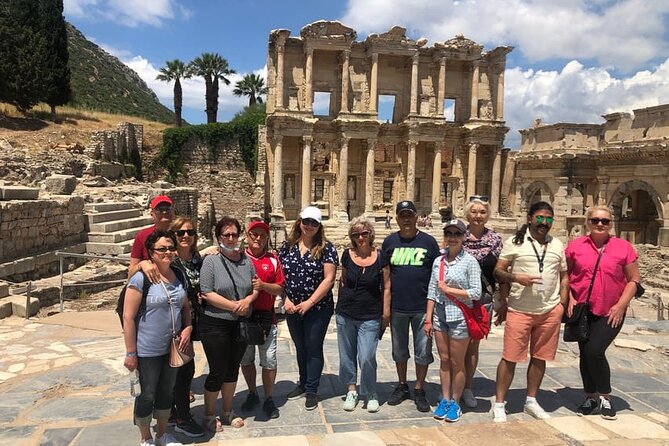
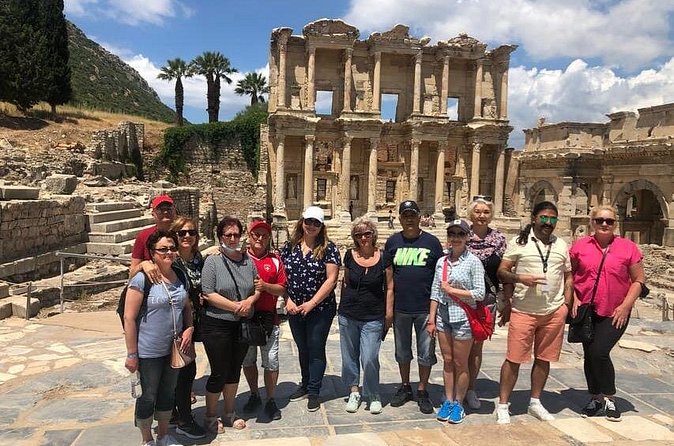
Stroll along Marble Street to the Celsus Library, famous for its restored façade. It’s noted as the ancient world’s third-largest library, which makes it feel less like random ruins and more like an information hub.
This is also a great moment to slow down. Look at the façade details, then picture how people would have used it for study and culture.
Temples, fountains, and the bonus “human scale” reminders
You’ll also pass by architectural standouts like the Temple of Hadrian, Trajan Fountain, Domitian Temple (with the note that Domitian’s temple was among the first dedicated to a human), and the Odeon for musical performances.
For a lot of visitors, the biggest surprise is how varied Ephesus is. It’s not only temples and theaters. It’s a whole civic machine. That’s why a guide helps. You learn what each space was for, not just what it looks like.
Possible drawback: Ephesus needs comfortable shoes
Even with a tight schedule, this part is still a lot of walking on uneven ground. If your feet are sensitive, treat it like a real hike. You’ll enjoy the tour more if you plan for that upfront.
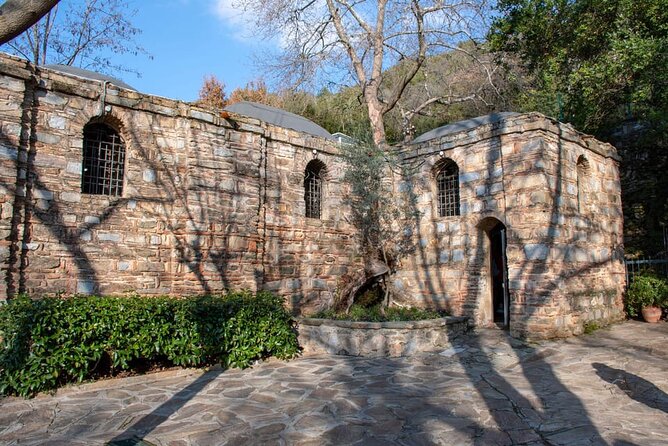
Meryemana, the House of the Virgin Mary: a calmer pause near Ephesus
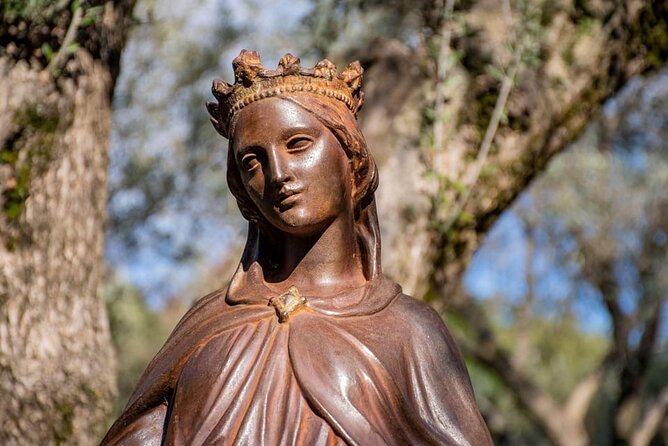
After the big open-air Ephesus section, you get a quieter shift at Meryemana (the House of the Virgin Mary). The stop is about 45 minutes, and that length usually works well if you want reflection time without feeling rushed into the next location.
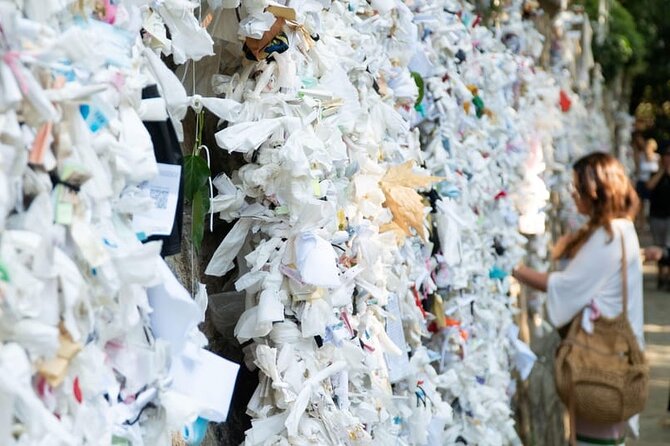
This site is considered a revered Christian pilgrimage destination, believed to be where Mary spent her final days and was assumed into heaven. The tradition shared here is that Apostle John brought Mary to Ephesus after the Resurrection, seeking refuge following the martyrdom of James and other apostles.
A few details make the site feel especially grounded in living tradition. The tour notes that three popes visited the shrine: Paul VI in 1967, John Paul II in 1979, and Benedict XVI in 2006. Their gifts to the shrine are displayed as symbols of the site’s sacred importance.
Even if you’re not deeply religious, it helps to know you’re stepping into a place people visit with real devotion. That changes how you experience the quiet.
Basilica of St. John on Ayasoluk Hill: Byzantine-scale faith
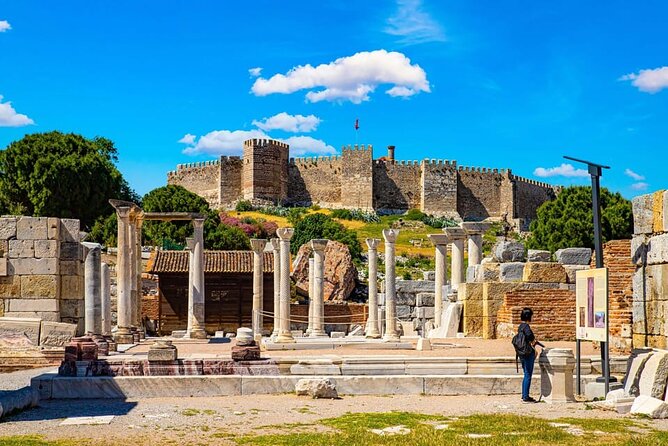
Next comes the Basilica of St. John, around 30 minutes. St. John the Evangelist is tied to Ephesus here, and the tour frames the story: he lived in Ephesus, taught the message of Jesus, and after exile on Patmos where he authored the Book of Revelation, he returned and died.
The location detail matters, too. The description says he was buried by his disciples on the southern slope of Ayasoluk Hill, and later an emperor honored him.
In the 6th century A.D., Roman Emperor Justinian commissioned construction of the basilica over his tomb. You’ll see a site known for grand domes and intricate mosaics, built as a major pilgrimage destination.
This stop is shorter than Ephesus, but it’s designed to hit the emotional note. You get a sense of how early Christians expressed devotion through architecture.
Temple of Artemis ruins: when you see religious layers
The final major attraction is the Temple of Artemis, with about 20 minutes. You’re looking at the ruins of one of the Seven Wonders of the Ancient World, dedicated to Artemis, the Greek goddess of the hunt and moon.
The tour also connects the deeper regional layers. It notes the temple was built around 650 BC, on a site sacred to Cybele, the Anatolian Mother Goddess, and financed by the King of Lydia. It was engineered on marshy ground to help reduce earthquake damage.
There’s also a dark political footnote here: it mentions that in 41 BC, Cleopatra’s sister Arsinoe IV was murdered there under Mark Antony’s orders.
Since the tour is a Bible study format, the closing framing is important. It’s positioned as a chance to understand how Christianity shaped religious life in the area, using Artemis as a symbol of earlier belief systems. Even with limited time, the contrast is the point.
Lunch in the countryside: why included meals make a difference
Lunch is included, and it’s specifically described as served in the countryside. In practice, that often means you get out of the immediate ruins zone, which helps your brain and your body reset.
Because drinks during lunch are not included, you may want to plan for water on your own. But the core point is that you’re not left searching for food near the sites, which can chew up half your day.
Also, countryside lunch time can make the rest of the day feel less like logistics and more like a visit.
Price and value: what the $30.10 covers, and what to budget next
The listed price is $30.10 per person, and the value is in the structure: private guiding, licensed local expertise, private transportation, parking fees, and a guaranteed on-time return for cruise schedules.
What’s not included matters:
- Entrance fee for Ephesus: €40.00 per person
- Entrance fee for House of the Virgin Mary: €10.00 per person
- Entrance fee for Basilica of St. John: €6.00 per person
That’s €56 total in the three specified paid sites, before any other optional purchases. The Temple of Artemis and Kuşadası Castle are listed as free within the itinerary stops, and some segments also note free admission tickets.
There’s also a practical advantage you should care about: tickets are arranged in advance to skip long ticket lines. On a port day, that can be the difference between “we barely saw anything” and “we hit the highlights.”
So how do you judge value? If you’re comparing against shared bus tours, the big win here is the private timing control plus cruise-safe pacing. If you’re already paying for entrance fees anyway, the “extra” cost you’re paying is for time saved and guidance, not for more monuments.
What to expect from your licensed English guide
This tour is built around a professional, licensed local tour guide authorized by the Ministry of Tourism and Culture, and the experience is offered in English.
You’ll notice the guide’s job isn’t only to describe what you see. It’s to connect the places to Christian stories, like St. Paul’s ties to the Agora, Mary’s tradition at Meryemana, and St. John’s tomb and Justinian-era basilica.
In the feedback for this kind of tour, guides are often praised for being accommodating and for having strong command of the material. Names that show up in positive comments include Yesra and Bilal, so if you get a guide in that same style, you’re in good shape.
If you want to maximize the day, bring a few questions. Ask where a story is “set,” then ask how the architecture matches the story’s themes. It turns the walk into something you can remember.
Practical tips so the day feels easy, not rushed
Ephesus is outdoors and the schedule includes open-air walking. Plan like it’s a warm-weather day even if your cruise weather looks mild.
- Wear comfortable, grippy shoes. Stone sites can be uneven.
- Bring sun protection since you’ll spend time at major Ephesus landmarks and the Artemis area.
- Use your meeting time wisely. The tour recommends meeting about 30 minutes after docking so you start before crowds build.
- Plan your budget for entrance fees. The tour makes it clear those main museum charges are extra.
Also, remember this is private. If you want to go slower at Ephesus or ask more questions at Meryemana, it’s the type of tour that can flex within a cruise-friendly schedule.
Who should book this private Ephesus Bible Study Tour
This is a strong match if you:
- Are on a cruise day and want a clear, timed plan with guaranteed on-time return
- Prefer private guiding over group bus chaos
- Want Christian context and Bible-related connections at major sites
- Like the idea of pairing Ottoman Kuşadası landmarks with ancient Ephesus and pilgrimage stops
It’s also a decent fit for visitors who want variety. You get theaters and libraries, then you switch to pilgrimage spaces. That keeps the day from feeling like one long ruin parade.
If you’re the type who wants a full-day archaeological deep dive with museum time, this might feel too short. But for a cruise half-day, it’s exactly the right size.
Should you book this tour or choose another option?
If you’re visiting Kuşadası with limited time, I’d book this. The combination of private format, licensed English guide, included lunch, and a plan built around cruise return makes it a practical choice.
Before you confirm, do two quick checks:
- Add up the entrance fees so you know your total cost for the paid sites (Ephesus, Meryemana, St. John).
- Be ready for a walking day at Ephesus in open-air ruins.
One more comfort point: the tour is set up for free cancellation up to 24 hours in advance, and it notes that if weather causes a cancellation, you’ll be offered a different date or a full refund. That’s worth having when you’re sailing on a tight itinerary.
FAQ
Is this tour private or will I share it with other groups?
It is a private tour for your party only. The description says there is no sharing with other groups.
How long is the Private Ephesus Bible Study Tour from Kuşadası Port?
The duration is listed as approximately 4 to 5 hours.
Does the tour include lunch?
Yes. Lunch in the countryside is included.
Are entrance fees included in the tour price?
Entrance fees are not included. Ephesus is listed as €40 per person, the House of the Virgin Mary is €10 per person, and the Basilica of St. John is €6 per person.
Where do cruise passengers meet the guide?
Cruise passengers meet at the Kuşadası Cruise Terminal (meeting point described as the cruise terminal area).
What happens if weather is bad?
The experience requires good weather. If it’s canceled due to poor weather, you’ll be offered a different date or a full refund.
Newest to reach the Kusadasi table
- Private Ephesus skip line Tour Lunch inc only for cruisers
★ 5.0 · 20 reviews - Kusadasi Private tour from Cruise Port
★ 4.5 · 20 reviews - Private Ephesus Tour From Kusadasi Port – SKIP THE LINE TICKETS
★ 5.0 · 20 reviews - Skip the Line: Ephesus Tour For Cruise Guest
★ 5.0 · 20 reviews - From Kusadasi Port: Ephesus Full-Day Private Trip
★ 4.9 · 20 reviews - Mini Group Skip-The-Line: Best of Ephesus Tour From Kusadasi Port
★ 5.0 · 21 reviews
Ancient Ephesus Tours, side by side.
FOR CRUISERS: Skip The Lines PRIVATE EPHESUS TOUR &On Time Return
Read our review →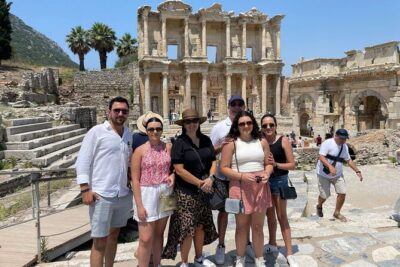
Top Choice For Cruisers: Ephesus, Mary’s House WITH TICKETS+LUNCH
Read our review →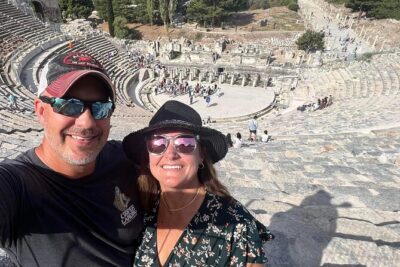
PRIVATE EPHESUS TOUR FOR CRUISERS: On-time Return and Skip-Line
Read our review →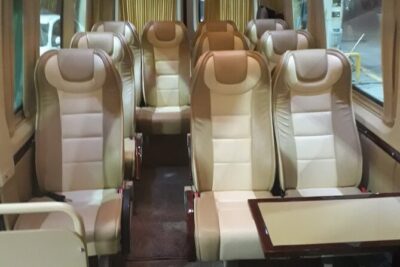
PRIVATE NO HIDDEN FEES Ephesus, Mary’s House Guided Tour /GRP OPT
Read our review →
For Ship Guests:BEST SELLER EPHESUS PRIVATE TOUR & On Time Return
Read our review →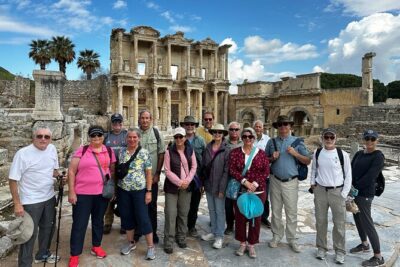
ALL INCLUDED: Ephesus Ruins, Mary’s House Tour incl ENTRY TICKETS
Read our review →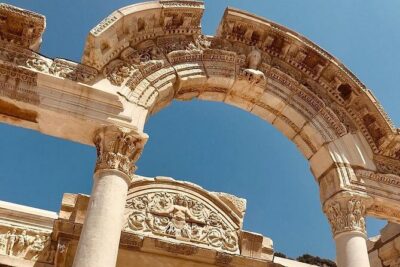
Ephesus Temple of Artemis and House of Mary Private Half Day Tour
Read our review →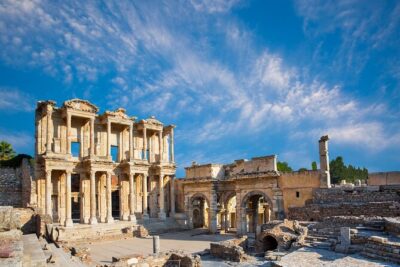
PRIVATE TOUR FOR CRUISERS: Mary’s House (Meryemana) and Ephesus
Read our review →Lists this tour turns up in